Mexico Is Going All In for Universal Health Care
Mexico’s new national health system aims to provide universal care. At a moment when US taxpayer dollars are being harnessed to destroy health care infrastructure abroad, Mexico is attempting to make a constitutional right to care into a lived reality.
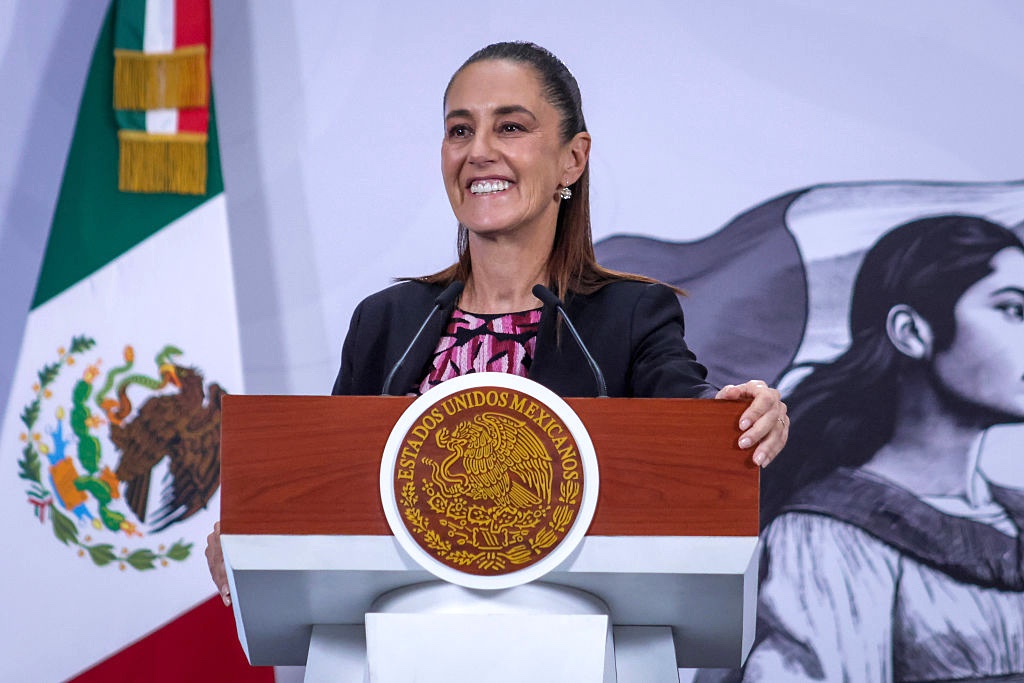
Claudia Sheinbaum is making the current disparate health care service in Mexico open and portable. (Mariana Maytorena / ObturadorMX / Getty Images)
At her morning press conference on April 7, President Claudia Sheinbaum announced that the credencialización process, or enrollment, for Mexico’s new universal health care service was set to begin. The goal, she explained, was unambiguous: “By the time we leave office, any Mexican will be able to go to any public health institution and receive care for any condition.”
To be phased in over the next four years, the reforms represent, in her words, “a historic step.” And if successful, indeed they will be. But in a fragmented health landscape where the Holy Grail of genuinely universal coverage has proved elusive, how will Sheinbaum’s ambitious rollout work?
A Service, Not a System
The key to the answer lies in the name itself: it will be a national health service, not a system. Broadly speaking, Mexico’s current public system is divided into four main areas: The Mexican Social Security Institute (or IMSS, for its Spanish acronym) is for salaried, private sector workers; the Institute for Social Security and Services for State Workers (or ISSSTE) is for their counterparts in the public sector; workers at the state oil company PEMEX have their own system; and the IMSS-Bienestar (Spanish for “well-being”), established by Andrés Manuel López Obrador’s (AMLO) administration, for those who do not qualify for the others, namely contract workers and the 33 million or so laboring in the informal sector. (An effort somewhat hampered by the fact that, in a dynamic roughly equivalent to the Obama-era expansion of Medicaid, a minority of states with right-wing governors have refused to opt in.)