Umberto Bossi, a Founding Father of Postmodern Italy
The late Umberto Bossi dreamed of breaking Italy’s north away from the rest of the country. Instead he helped refound Italy itself, as he forged an alliance with former fascists and the billionaire Silvio Berlusconi.
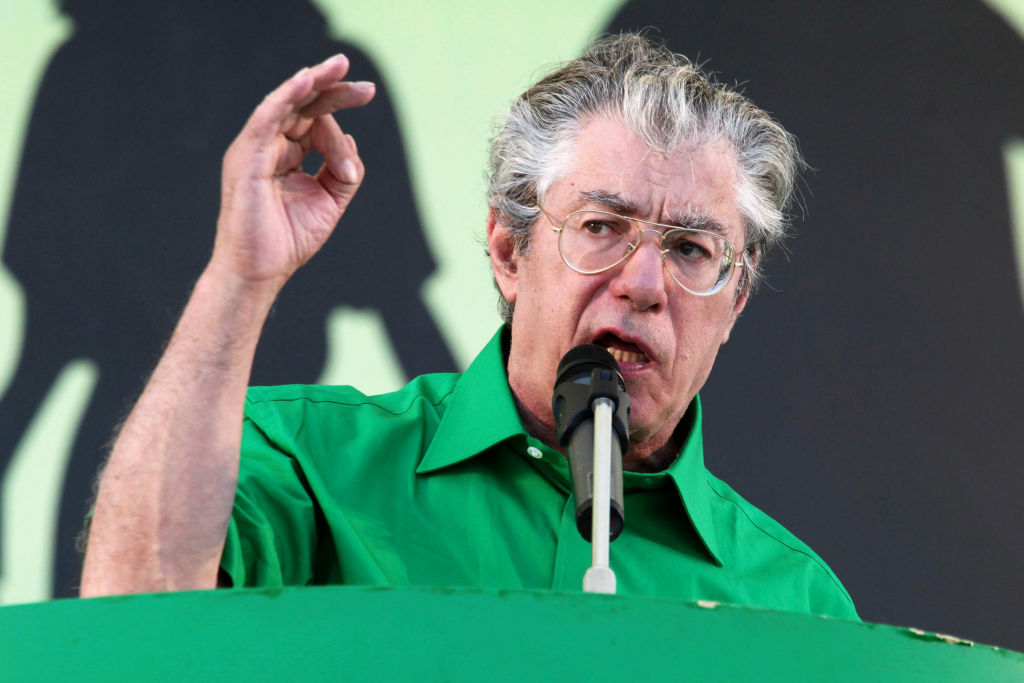
Umberto Bossi and his party, the Lega Nord, profoundly transformed Italian politics.(Barbara Zanon / Getty Images)
Umberto Bossi died last Thursday after being confined to the political margins since 2012, when a party funding scandal forced him to resign as leader of the Lega Nord, which he founded in the 1980s. Yet it is hard to deny how profoundly, and enduringly, Bossi and the party he created transformed Italian politics.
The Lega was pioneering in its form (its absolute leader-centrism), in its political focuses (regional autonomy, hostility to taxes, an exclusionary model of welfare, immigration), and in its structure (the emergence of a right-wing alliance combining neoliberalism, conservatism, and nationalism).
It also made a mark on legislation, from a reactionary immigration law cosigned by Bossi to a constitutional reform devolving powers to regions — though this was introduced by the center-left government in 2001 to compete with his Lega. Perhaps most innovative was the Lega’s language: the normalization of vulgarity, profanity, and violent aggression as key elements in the artificial construction of the “popular leader.”