How Will the Future Judge Our Own Gilded Age?
At the end of the Gilded Age, Edwin Markham’s poem “The Man with the Hoe” became an ideological litmus test, polarizing the American public between an allegiance to either workers or the oligarchy in an age of massive inequality surpassed only by our own.
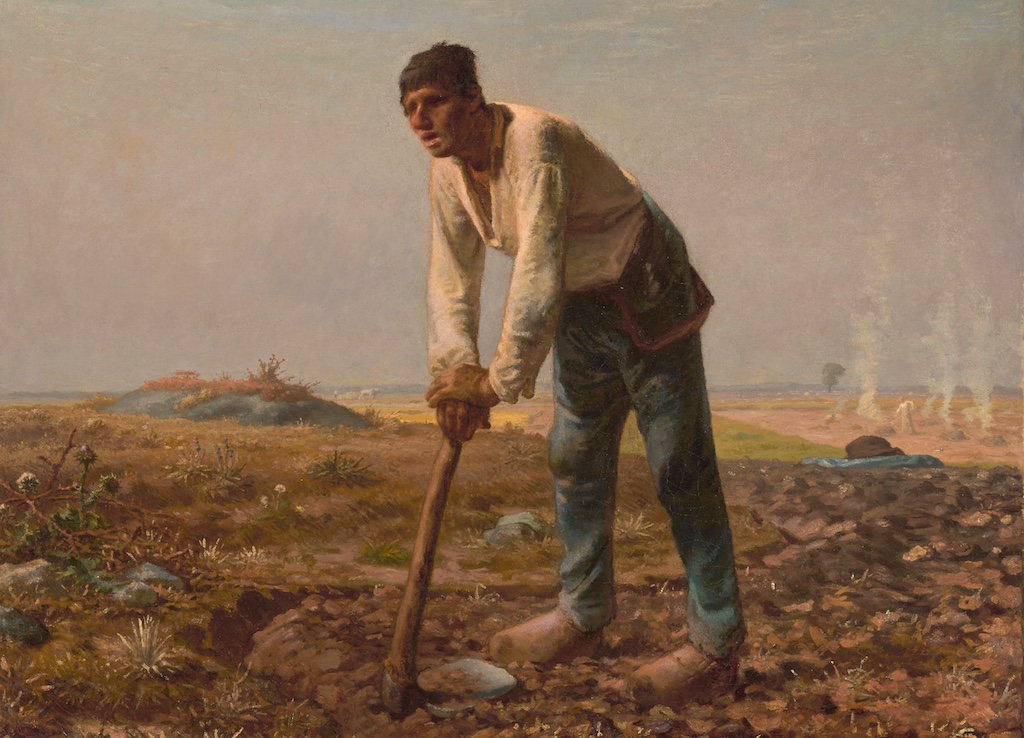
The Man with a Hoe by Jean-François Millet, 1860–62. (Heritage Art / Heritage Images via Getty Images)
Bowed by the weight of centuries he leans
Upon his hoe and gazes on the ground,
The emptiness of ages in his face,
And on his back the burden of the world.
So begins Edwin Markham’s lionized poem “The Man with the Hoe.” At the tail end of the Gilded Age and the dawn of the Progressive Era, Markham’s incisive critique of the gaping wealth inequality that came to define this period in American history was lauded as “the battle-cry of the next thousand years” and “the supreme poem of the century.” The poem contributed to a vigorous national dialogue — immortalized in the opinion and letter sections of newspapers across the country — on labor’s role in society and the potential for a socialist future.
Much like debates across social media today, however, not all the commentary was celebratory. Tensions between classes had reached such a zenith that they also provoked responses like this: “As a tiller of the soil, I resent personally every word of the ungrateful writer who smites in the face of the man who feeds him.”