A Missed Opportunity for the French Left

First-round results suggest the French left can hold its ground in this month’s local elections. This positive outcome comes despite a campaign defined by an acrimonious civil war between the center-left establishment and France Insoumise.
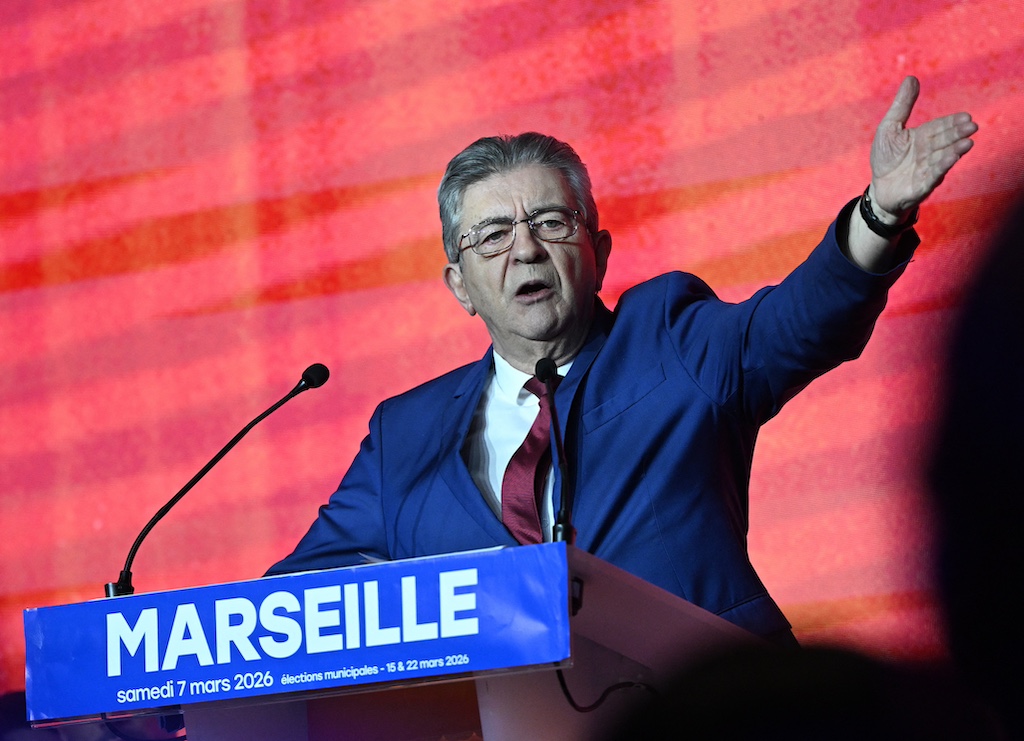
The price of disunity is that the Left is at best holding its ground, with few signs of the necessary breakthrough beyond its usual bases of support. (Miguel Medina / AFP via Getty Images)

This month’s local elections in France may not turn out to be such a debacle after all. A far cry from the nationalist and conservative wave that many had feared, left-wing candidates are reasonably well positioned to hold on to power, not only in major urban centers like Paris and Lyon. The first-round vote on March 15 also has the Left holding its own in smaller and midsize cities, and it has a chance to notch up victories in places like Toulouse.

The far right is making inroads, but that’s hardly breaking news. Marine Le Pen’s Rassemblement National and its allies are on the path to extend their grip in rural areas and traditional bastions along the Mediterranean coast and in the industrial north. They are even now eyeing larger cities like Nice and giving the Left a run for its money in Marseille, France’s second-largest city. This year’s biggest loser will likely be Emmanuel Macron, whose conservative-centrist bloc is set to continue its gradual disappearance from the political stage two years after its self-inflicted blow in the 2024 snap parliamentary elections.

The relative surprise is the Left. The parties that made up the erstwhile left-wing alliance Nouveau Front Populaire (NFP), which won the largest share of seats in the snap elections in summer 2024, are still providing a credible alternative — almost despite themselves.

France’s local elections are upturning one of the main stories of the last year, which saw the unity of the NFP succumb to an internecine power struggle between its two biggest factions: the centrist Parti Socialiste (PS) and Jean-Luc Mélenchon’s France Insoumise (LFI).

For mainstream media outlets and top brass in the center-left establishment, these elections were supposed to be the chance to mark a break from France Insoumise, the largest of the NFP caucuses elected in July 2024. Defying expectations of the party’s weakness in interim non-presidential elections, France Insoumise will win city hall control in bastions like Saint-Denis, a large municipality just north of Paris, and postindustrial Roubaix. It also has a shot in the largely inter-left duel for control of Lille. Elsewhere, its high first-round scores make it a critical share of the electorate that LFI’s estranged partners need to convince before the runoffs on March 22 — support which could prove critical in cities like Lyon, Marseille, and even Paris.

There’s one conclusion that hopefully all parties of the former NFP are paying attention to: after the drama of party struggles settles down, electorally there’s no way around the imperative for left-wing unity. One year before the 2027 presidential elections, and the parties of the Left remain as mutually dependent as ever. This applies both to France Insoumise, which doesn’t always seem to take the measure of its political isolation, as well as to the leadership of the PS, Greens, and Communists (PCF).   

This message may never really land. For months, this election was meant to be a referendum against Mélenchon’s force. Instead, these elections — LFI’s first major foray into municipal politics — has shown that the party maintains the loyalty of a solid chunk of the left-wing electorate, though its difficulty in breaking out of its traditional bastions ought to be cause for reflection. What’s proving worryingly sticky in the public perception of it as a party is its image as a divisive “far-left” grouping, in lockstep with its aging standard-bearer.

But nothing justifies the campaign of excommunication that the centrist PS has waged in its attempt to claw back hegemony over the left-wing space. From the Macronists to Le Pen, France’s chaotic political field has for months come together behind a full-on offensive against LFI, with accusations of antisemitism against Mélenchon and his party coming back in full force in recent weeks.

The mid-February killing of a fascist activist in Lyon also spiraled into a national indictment of the left-wing force, affiliated with activists of the Jeune Garde antifa group involved in the violent confrontation that resulted in Quentin Deranque’s death. Through it all, it was often hard to distinguish between PS spokesmen and their competitors in the Macronist center and far right.

In several key contests, PS and allied candidates now have little choice but to seek support from France Insoumise voters — just the electorate that has been denigrated as irrational and deluded radicals. Under PS leader Olivier Faure, the party is sticking to its preelectoral omertà against a national pact between France Insoumise and the center, rebuffing LFI calls for “anti-fascist” lists in the second round.

Encouragingly, there is some flexibility on the local level. In Lyon, incumbent Écologistes mayor Grégory Doucet has merged lists with the LFI hopeful, placing it in good position to hold off the Right. PS and allied candidates have even agreed to sign up behind LFI frontrunners in places like Toulouse. In Paris and Marseille, the center left has opted to go it alone, counting on lingering divisions on the Right to ensure victory.

The anti-LFI bashing tends to be reined in when push comes to shove. The centrist liberal Raphaël Glucksmann, a possible standard-bearer for the PS in 2027, is the leading advocate for the anti-LFI front. “The Glucksmann line has been defeated in the voting booths. The ‘never-PS’ line of Jean-Luc Mélenchon is also beaten,” left-wing MP Alexis Corbière told Le Monde in reaction to this Sunday’s results. But the persistent problem is translating cool-headed thinking like this into a baseline strategic assumption about the current political crisis. Himself one of the MPs purged from LFI in the lead up to the summer 2024 election, Corbière also serves as a reminder that LFI has not always made its stubborn strength easy for its partners to accept.

This electoral cycle ought to be seen as a missed opportunity. Instead of a chance to build on past gains, the Left has been mired by an internal power struggle that drowned out the outlines of a largely shared program for better municipal life. Calls for more investment in social housing and free school lunches, along with expanding public transportation, were heard from candidates across the left-wing field, from LFI and the PCF to Écologistes and, yes, the PS.

But looking back, it’s impossible to say that these propositions are what this campaign has really been about. Instead, these ideas and many like them became drowned out by reckless acrimony, deepening divisions a year before an election that could well see the far right sail into the presidency.

The price of disunity is that the Left is at best holding its ground, with few signs of the necessary breakthrough beyond its usual bases of support. It’s not hard to see a connection between that fact and another trend confirmed by this year’s vote: the French are voting less and less often. Barring the exceptionally low turnout in the pandemic-era 2020 local elections, this year’s vote looks set to mark a new record, with first-round abstention rising to over 42 percent from the 36 percent of registered voters in 2014.