The Already Tattered US Safety Net Is Fraying Even More

The US spends far less on social programs than comparable nations, and red-tape barriers ensure that millions who qualify for help never receive it. Republicans are further eviscerating the safety net when we should be repairing and expanding it.
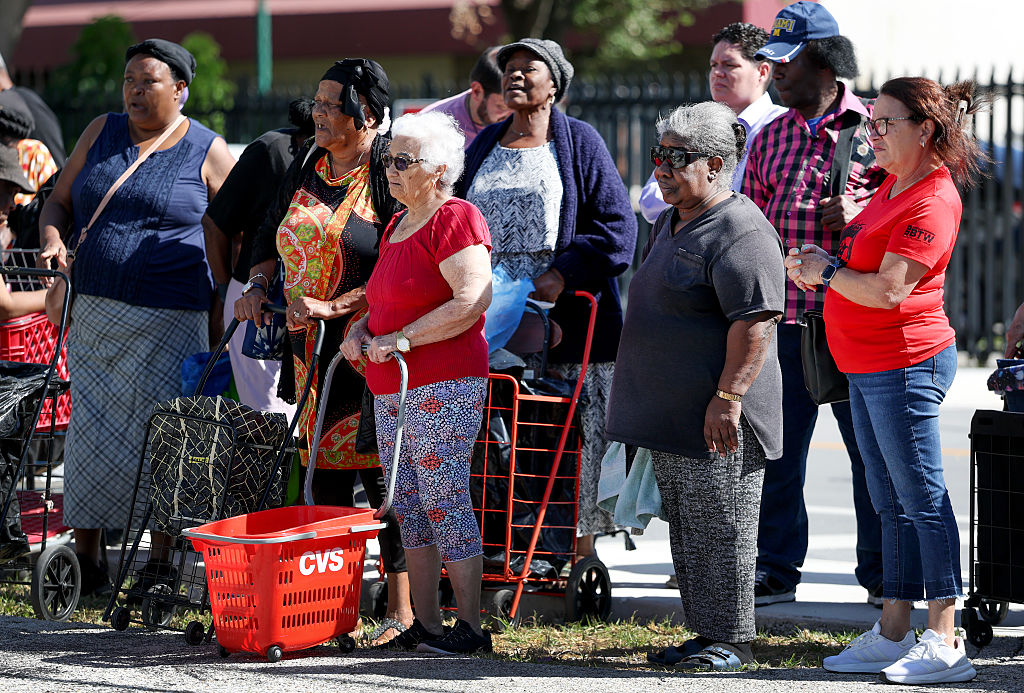
Three out of every five eligible seniors who qualify for SNAP get no benefits. (Joe Raedle / Getty Images)

“Keep looking for help. There are lots of resources out there if you search for them.”

More times than I can count, my law school clinic students and I have stood in front of judges who repeat this bromide to our clients while those same judges order the eviction of a family, deny health coverage for a person living with disabilities, or block someone who has been laid off from getting unemployment benefits.

Right-wing think tanks insist our welfare system is generous, and even well-meaning social work programs claim our programs ensure people meet their basic needs. That is not true.

The United States is the richest nation in the world. It is also one that, compared to similar nations, has a significantly higher poverty rate, more people going without health care and medicines, more children living in hunger, and more people living without shelter.

This widespread suffering can be directly linked to our tattered safety net. The United States spends 18.5 percent of its gross domestic product (GDP) on housing, health care, and other economic needs, an amount markedly lower than other democratic, market-based countries. Germany, for example, spends over 25 percent of its GDP on government-provided assistance; Japan spends 22.6 percent; and France nearly 31 percent.

Last year’s One Big Beautiful Bill Act (OBBBA) is making things even more difficult for many struggling people in the United States. Here are the ways our existing programs fall well short of meeting the needs of those who qualify.

Food

The Supplemental Nutrition Assistance Program (SNAP), also known as Food Stamps, is far and away the largest US food program, with nearly forty-two million people receiving benefits. But those SNAP benefits fall well short of what is needed to keep families fed. Analysis by the Urban Institute shows that even the maximum SNAP allotment is significantly less than the cost of modestly priced meals. In urban areas, typical meals can cost 28 percent more than SNAP benefits cover. So it is no surprise that one-third of households that receive SNAP benefits also have to seek help from food pantries or emergency kitchens.

Worse yet, many who qualify for SNAP never receive it. Red-tape barriers to applying for food assistance, not to mention an intimidating process for recertifying eligibility, cause 14 percent of eligible children to receive no SNAP assistance at all. Three out of every five eligible seniors who qualify for SNAP get no benefits.

The OBBBA further constricted SNAP enrollment, expanding work requirements for adults up to age sixty-four, including veterans and unhoused people. Work requirements for benefits programs may seem reasonable on their face, but they have a long track record of overreach, creating a bureaucratic barrier that kicks out people who are already working or living with disabilities. The OBBBA also disqualifies from food assistance many refugees, asylum seekers, and survivors of domestic violence who formerly qualified for help.

Family Support

US programs providing financial assistance for impoverished families have long been shaped by two forces. The first is the condemnation of single parents, especially black mothers. The second is the business elite’s commitment to ensuring that working-age people are desperate enough to seek and accept poverty-wage jobs. Those ugly motivations endure, in part through the appallingly low levels of benefits provided.

The program first known as Aid to Families with Dependent Children (AFDC), which was renamed Temporary Assistance for Needy Families (TANF) in 1996, provides cash benefits that vary across states. But one uniform characteristic is that the assistance provided is far lower than the amount a family needs to survive. Maximum TANF benefits are less than 60 percent of the federal poverty level in every state and below 20 percent of the federal poverty level in more than a third of states. In my home state of Indiana, for example, the maximum monthly TANF benefit for a family of three is just $513, which covers only a fraction of typical rent, not to mention other expenses. As with SNAP, even this paltry sum is denied to millions of families in need.

The “Temporary” in TANF’s title is no joke, either. The Personal Responsibility and Work Opportunity Reconciliation Act (itself an Orwellian name) was passed by the Newt Gingrich Congress in 1996 and signed into law by President Bill Clinton. The punishing foundation of TANF, which triggered the resignation in protest of two high-ranking Clinton welfare policy officials, created a nationwide family lifetime time limit of sixty months for benefits. States are free to impose even more restrictive limits: in Indiana, the maximum is just twenty-four months.

Before the 1996 rollback, nearly 70 percent of families with children in poverty received AFDC assistance. Now these time limits, paired with work requirements and other red-tape barriers like recertification obligations, have limited TANF to just 21 percent of those families.

Subsistence Income

Beyond a few isolated projects, the United States does not have a guaranteed minimum income program, despite such programs’ proven effectiveness at meeting basic needs like food, shelter, and health care. The closest we have is the Supplemental Security Income, known as SSI. SSI is a federal program for people who are living with severe disabilities that leave them unable to work and have little to no income or assets. Many of our clinic’s eviction court clients, and many unhoused individuals, are among the 7.5 million people who receive SSI.

Simply put, SSI’s rules ensure that all who receive it are condemned to extreme poverty. For an individual, the maximum monthly SSI check is $967. Couples who are both eligible for SSI are limited to $1,450 per month. Many of our clients who receive SSI spend literally every penny of their checks on rent, with nothing left over for other living expenses. They cannot access any other resources to cover their expenses, since they risk being cut off from the program if they receive more than $20 in cash or in-kind assistance from family or others.

At least they are enrolled in SSI. The program’s onerous financial and disability eligibility requirements result in the rejection of more than half of all SSI applications. Virtually all of the denied applicants we see are clearly eligible for the program yet ensnared in a cruel Catch-22: the same disabilities and poverty-caused barriers that lead them to need SSI contribute to them getting overburdened by the red tape of the application process.

Health Care

Medicaid is the health insurance program for low-income people that is jointly funded by the federal and state governments. Medicare provides health insurance for people over age sixty-five and some people living with disabilities — it can overlap with Medicaid when those covered people are also low-income.

Over seventy million people in the United States have their health care coverage through Medicaid, including two of every five children in the country. That number should be far higher.

Complicated application requirements have long blocked millions of people from receiving Medicaid. Onerous recertification requirements knocked off many who were once enrolled.  Then, Donald Trump and congressional Republicans decided to make it worse.

The OBBBA imposed work requirements for Medicaid, even though most enrollees under age sixty-five are either working already, are living with disabilities, or have other barriers preventing them from paid work. The administrative burdens of Medicaid work requirements already in place in states like Arkansas have caused tens of thousands to lose health care while not increasing employment at all. The OBBBA also terminated Medicaid and Medicare coverage for many lawful immigrants who are refugees, asylees, and survivors of domestic violence.

Medicaid is popular, with three-fourths of Americans supporting the program. But it has significant flaws, largely stemming from the widespread privatization of the program. Most Medicaid enrollees have their health care controlled by managed care organizations. Those companies seek to maximize profits by restricting provider networks and blocking care through measures such as prior authorization requirements, barriers that are applied more frequently to Medicaid enrollees than to those with other forms of insurance.

Those cost containment measures are deeply damaging. A 2024 survey by the American Medical Association showed large majorities of physicians reporting that prior authorization often delays care to the point where patients abandon treatment or have to be hospitalized. In fact, many Medicaid enrollees with prior authorization requirements never get the care their provider recommended.

Administrative barriers like these, coupled with low reimbursement rates, cause many providers to refuse to accept Medicaid patients. The problem is particularly pronounced in behavioral health. Almost 40 percent of Medicaid enrollees live with a mental health or substance use disorder, but only about one-third of psychiatrists will accept new Medicaid patients.

Unemployment Insurance

Low-wage employers’ impact on the US social safety net may be most profoundly felt in the nation’s unemployment insurance program. Relentless lobbying by business elites has ensured that, when a US worker loses their job, they are unlikely to receive any benefits at all. Fewer than three out of every ten unemployed US workers receive unemployment insurance benefits.

The other 70 percent are blocked by multiple restrictions: mandated delays before receiving benefits; disqualification of gig workers, seasonal workers, and many part-time workers; required minimum preemployment earnings; paperwork barriers; employer opposition to benefits applications; and time limits on benefits. Together, they bar deserving workers from assistance.

If they are fortunate enough to qualify, unemployed US workers’ benefits average less than half their wages before losing their jobs, far less than in comparable nations. Because states set their own benefit levels, unemployment insurance payments in many states are even lower.

Housing

As flawed as the US food, health care, and income support programs are, the country’s pathetic housing efforts are worse. At least all who can prove eligibility for SNAP, TANF, SSI, Medicaid, and Unemployment Insurance receive it. Those are entitlement programs. Not so for US housing supports.

Like child care subsidies, the underfunding of housing programs creates a mad scramble for scarce resources. It is a competition that has far more losers than winners: more than three of every four households that are eligible for housing vouchers or subsidized units do not receive them. Massive waitlists are maintained, filled with the names of families and individuals seeking housing support. The waitlists are usually closed, with literal stampedes having occurred on the rare occasions they are opened.

Yet a household’s name being pulled from the waitlist does not guarantee safe shelter, either. The largest US rental assistance program is the Housing Choice Voucher program, which puts the burden on recipients to find private-market landlords to accept their voucher. With no federal requirement for landlords to accept voucher tenants (some localities and states prohibit discrimination against voucher holders), would-be tenants’ searches are often futile. Over 40 percent of voucher holders can’t find a willing landlord, and those who succeed spend on average seventy-eight days searching.

Those who can access increasingly scarce public housing units don’t have to search for a landlord. But decades of lawmakers starving public housing agencies of funding means public housing tenants often find their buildings and units to be in disrepair and unsafe.

Yet. . . the Safety Net Can Work

A tragic irony of the United States’ frayed social safety net should also motivate efforts to improve it: the programs, deficient as they are, still achieve remarkable results. A two-decade analysis of the TANF, SNAP, and Medicaid programs has shown that participation in the programs significantly reduced economic hardship and food insufficiency. Receipt of unemployment benefits has been shown to cut household poverty rates in half.

Medicaid has been proven to support the financial stability of families, along with better physical and mental health for all in the household and higher educational attainment of covered children. Similarly, affordable housing increases the income of the household, longevity of the adults, and school success of the children.

The flaws in these programs mean that too many US households are wrongfully denied these benefits. We would do better to expand these programs and reduce barriers to accessing them, as our government did just a few years ago in response to the COVID-19 pandemic. When that happened, poverty rates dropped dramatically, and overall well-being increased. That success shows what is possible if we commit to repairing the many holes in our safety net.