Why Americans Feel Like They’re Falling Behind
There is a widespread feeling that the living standard of the average American has declined since the mid-20th century. This is false — but it reflects the reality that it is now much harder for single-earner families to afford a mainstream lifestyle.
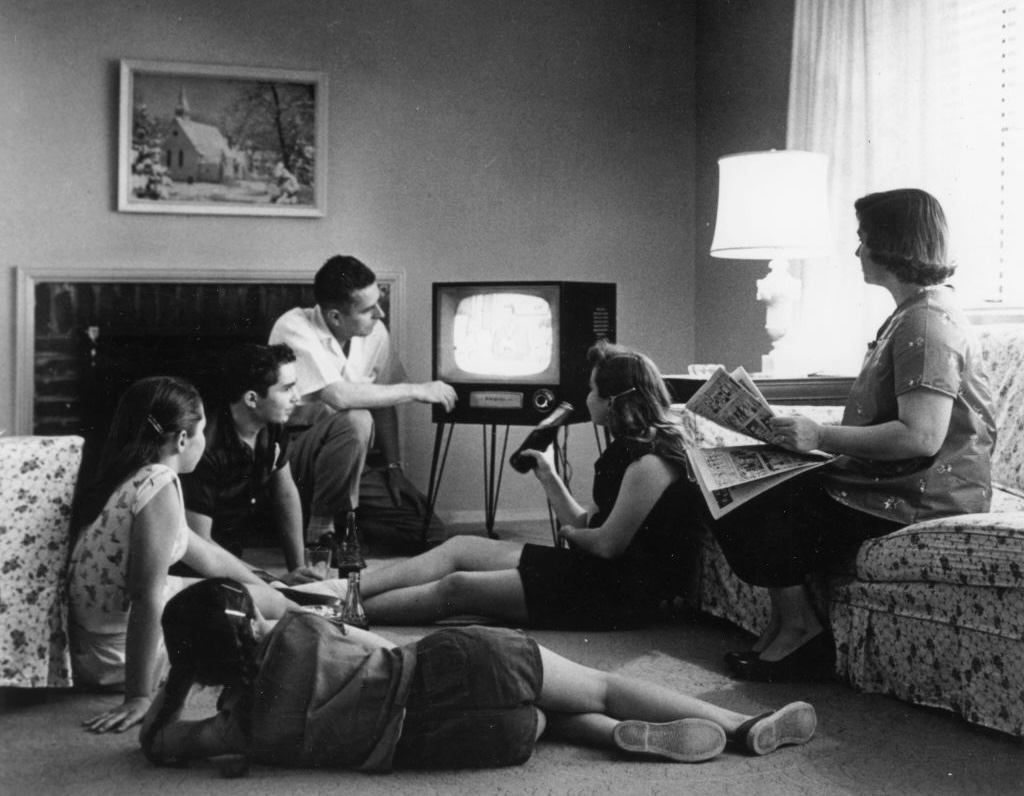
In 1963, a family surviving solely off a median married man’s wage would have an income that was 81 percent of the median family income. In 2024, such a family would have an income that is just 55 percent of the median family income. (USIA / Bumgardner via Getty Images)
Michael Green wrote a piece at the Free Press in which he provocatively argues that the real poverty line is $140,000. There is not really much to the piece. Green just plugged a New Jersey county into Amy K. Glasmeier’s Living Wage calculator and got served a page that says that a two-earner, two-child family in that county needs to earn $136,498 to meet their “basic needs.” Glasmeier’s figures assume both children are currently in childcare, use the 40th percentile rent for housing costs, and use median and average spending amounts on most of the other expenditure items. Realistically, it is an estimate of the median standard of living rather than an estimate of “basic needs,” which is why the figure is so much higher than more conventional poverty lines.
Nonetheless, Green’s piece set off a wave of secondary commentary, including pieces from Jerusalem Demsas, Scott Winship, and Matt Yglesias. Yglesias’s piece seizes on the part of Green’s piece that argues that people used to be able to live on a single income but not anymore. Here is Green:
For that time, that floor made sense. Housing was relatively cheap. A family could rent a decent apartment or buy a home on a single income. Healthcare was provided by employers and cost relatively little (Blue Cross coverage cost in the range of $10 per month). Childcare didn’t really exist as a market — mothers stayed home, family helped, or neighbors (who likely had someone home) watched each others’ kids. Cars were affordable, if prone to breakdowns. College tuition could be covered with a summer job.
Orshansky’s food-times-three formula was crude, but as a crisis threshold — a measure of “too little” — it roughly corresponded to reality. But everything changed between 1963 and 2024. Housing costs exploded. Healthcare became the largest household expense for many families. Employer coverage shrank while deductibles grew. Childcare became a market, and that market became ruinously expensive. College went from affordable to crippling.
The labor model shifted. A second income became mandatory to maintain the standard of living that one income formerly provided. But a second income meant childcare became mandatory, which meant, for many, two cars became mandatory. The composition of household spending transformed completely.