Tupac Shakur Was Forged in a Revolutionary Political Culture
Tupac Shakur was a deeply political artist, shaped by the radical left-wing traditions of black America. A new biography finally does justice to this side of his life and work.
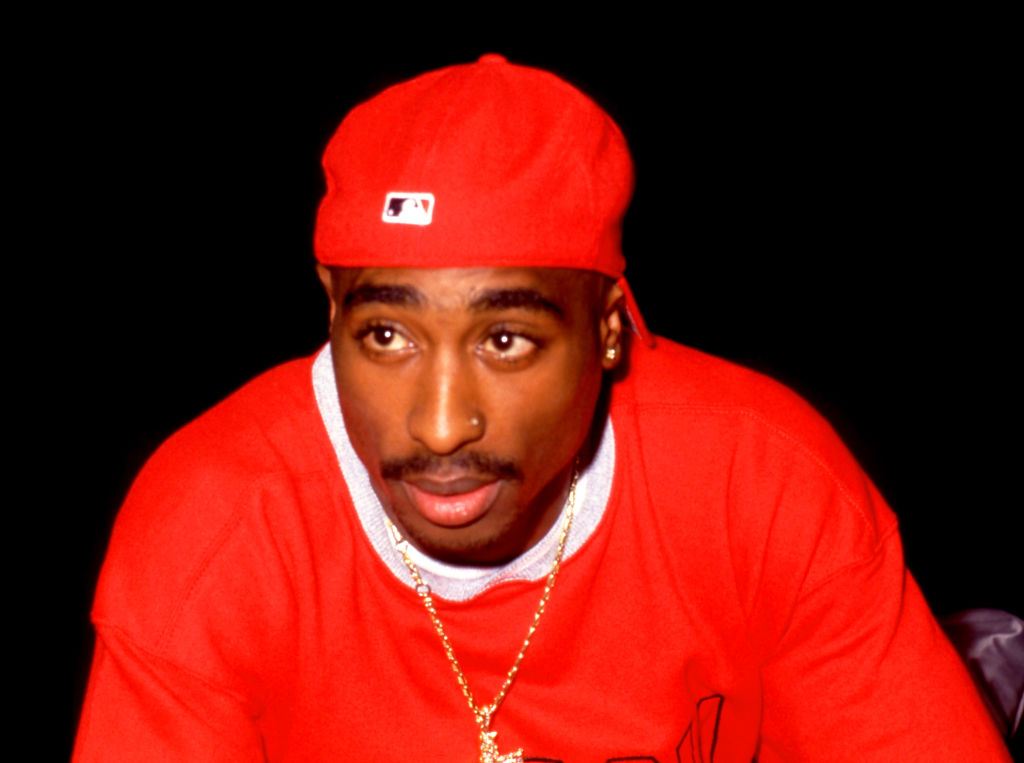
Since his death in 1996, Tupac Shakur has existed less as a person than a symbol, flattened by myth, commodified by nostalgia, and recycled endlessly by an industry that thrives on decontextualized images of rebellion. A corrective is long overdue. (Bob Berg / Getty Images)
Who was Tupac Shakur? Depending on who you ask, you’ll get a plethora of responses. He was hip-hop’s greatest icon. He was a violent thug who was convicted of sexual abuse. He was the voice of the oppressed. He was a radical political figure who channeled his own experiences to call out a racist, imperialist government.
Or, perhaps, he was all of these things at once. No matter which answer you get, though, what remains undisputed among those who have grown up with the image of Tupac is that his life unfolded as a revolutionary.
What does that mean, though? You may have come across a social media post or two about Tupac, declaring that his mother, Afeni Shakur, was a prominent member of the Black Panther Party who was involved in the Panther 21 trial. Or that former Panther and Black Liberation Army militant Assata Shakur, who passed away recently, was his godmother. Yet it rarely ever goes beyond that.