Shake Shack Is Restricting Its Customers’ Legal Rights
Following an industry trend, fast-food chain Shake Shack recently updated its terms of use agreement to include a binding arbitration agreement and class-action waiver denying customers their legal right to take the company to court.
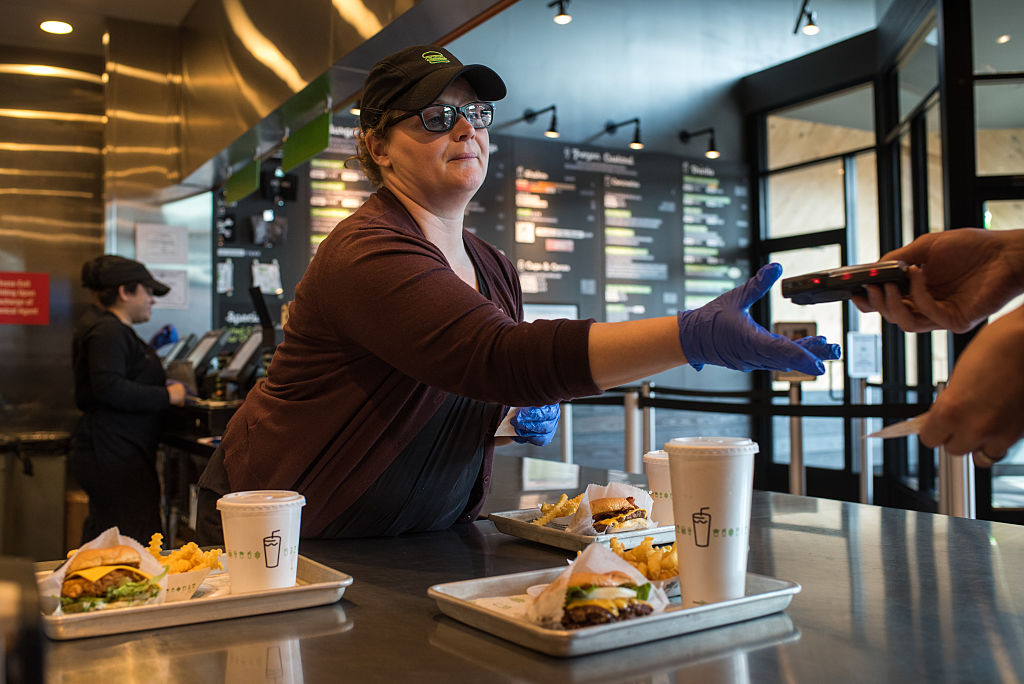
Thanks to provisions included in Shack Shack’s new terms of service, ordering your next ShackBurger could mean giving up your rights to sue the company for harms like the E. coli outbreaks we’ve seen at Chipotle and McDonald’s. (Ron Antonelli / Bloomberg via Getty Images)
Fast-food chain Shake Shack recently updated its terms of use agreement to include a binding arbitration agreement and class-action waiver denying customers their legal right to take companies to court. These provisions are showing up across the fast-food industry, extending restrictive contracts to consumers through the rapid expansion of online services such as websites, mobile apps, and automated self-service kiosks.
Arbitration courts are a pay-for-play private justice system in which cases are overseen by judges hired by the company being sued, and the chances of consumers ever winning a lawsuit are extremely low — upwards of 90 percent of cases rule in favor of companies. These contracts have spread across the economy, from health care to live entertainment. But until recently, fast-food chains were generally only able to wield them over their workers in employment contracts.
The digitization of ordering is driven by several factors that enable restaurants to rake in more profits. You may have noticed that every fast-food chain from Wendy’s to McDonald’s now wants you to order through their own company app, even if you’re picking up in person. That’s because once the company gets into your phone, it can collect data, surveil your spending habits, and serve you personalized pricing to extract as much money as possible. Inside the store, automated kiosks are helping restaurants downsize their workforce and slash labor costs.