The Socialist Politics of Tupac Shakur
Tupac Shakur was murdered 29 years ago today. His status as a cultural icon is beyond dispute, but the legend that’s built up around his tragically short life has often overshadowed the radical political outlook that shaped his work.
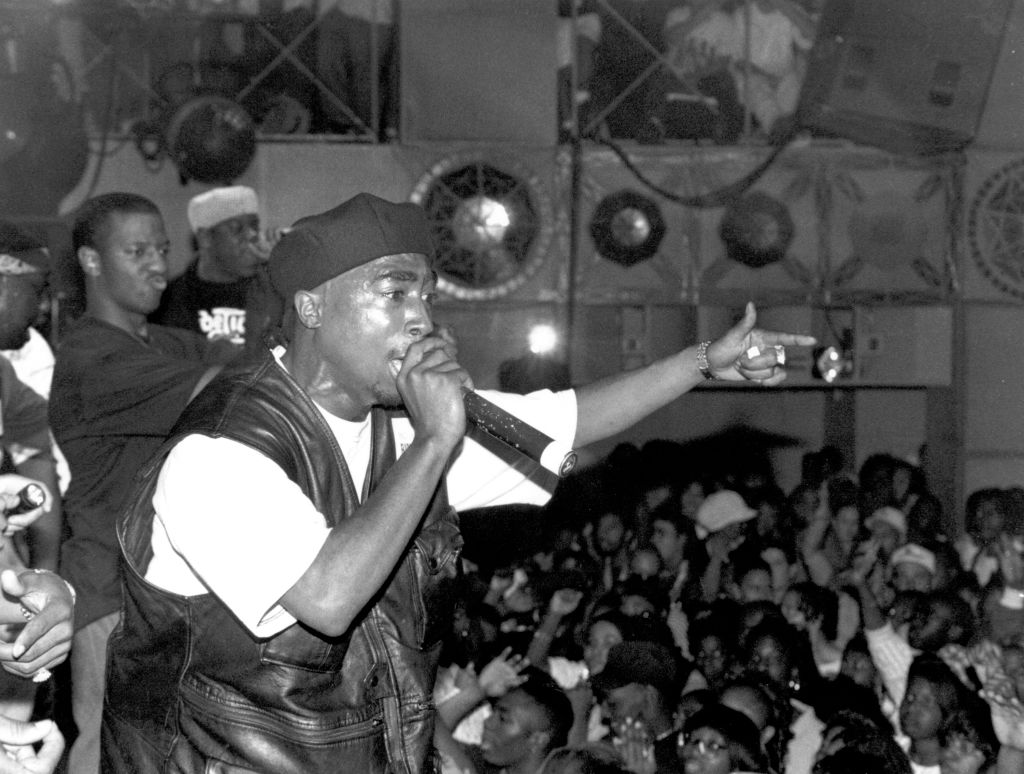
On the anniversary of the day he was killed, it’s important to revisit Tupac Shakur not just as an artist, but also as a revolutionary. His searing critiques of capitalism, racism, and American empire have been buried beneath layers of cultural myth.(Al Pereira / Michael Ochs Archives / Getty Images)
Tupac Shakur has been everything to everyone. A martyr. A thug. A poet. A luminary who eclipsed stardom itself. Almost three decades after his untimely death, he endures, his image splashed across murals, posters, and T-shirts worldwide — much like a certain Argentine doctor.
Yet while Tupac’s legacy persists, it is also, like that of Che Guevara, too often stripped of the radical politics that defined his life. His defiant scowl and “Thug Life” tattoo have been immortalized as a brand, while his revolutionary lineage and his critiques of capitalism, racism, and American empire have been buried beneath layers of cultural myth.
In death, as in life, Tupac resists easy classification. But beneath his contradictions lay a political clarity that made him dangerous, not just to the music industry but to the ruling order he denounced. He was a child of Black Panthers and political prisoners who rapped about class struggle from the belly of the beast. He condemned the police state, the prison-industrial complex, and the abandonment of black communities under capitalism.