The Panamanian Right’s Dirty Alliance
Panamanians have taken to the streets to protest neoliberal austerity, Canadian mining, and US military presence. Raúl Mulino’s right-wing government, closely allied with North American interests, has responded by arresting thousands.
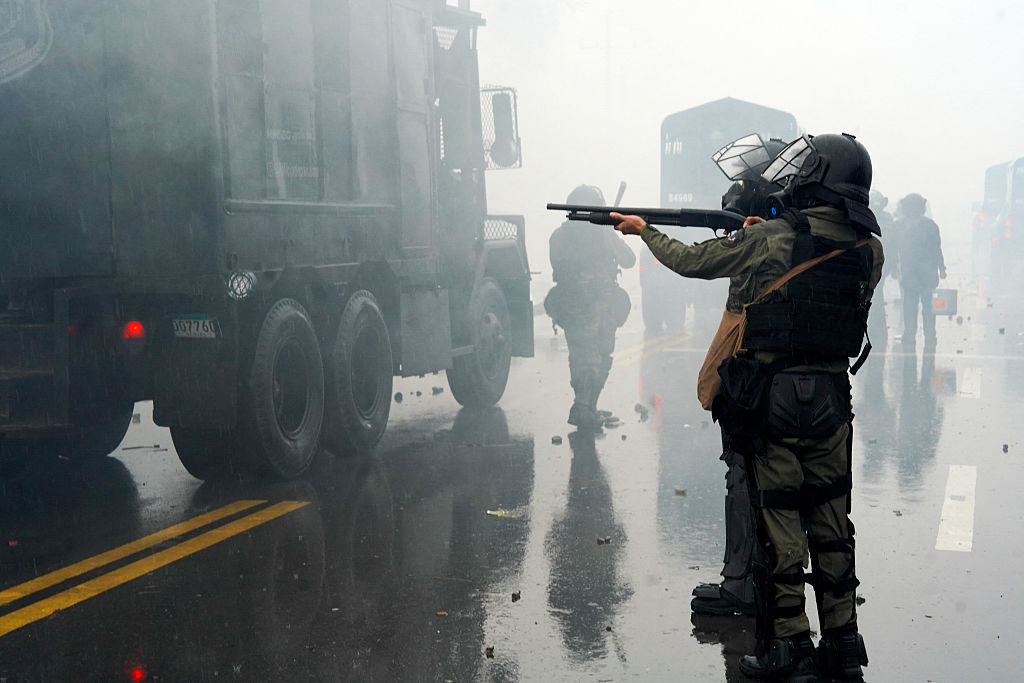
Riot police fire at protesters demonstrating against José Raúl Mulino’s government, in Changuinola, Bocas del Toro, Panama, on June 21, 2025. (Asbel Llorent / AFP via Getty Images)
“We are living in a right-wing dictatorship.” This is how Joyner Myron Sánchez, deputy secretary general of the anti-imperialist political organization Juventudes Revolucionarias (Young Revolutionaries, JR), describes the situation in Panama today. “If you disagree [with the government], you may either go to jail or get murdered.”
Since early 2025, Panamanian social movements have mobilized to protest the neoliberal economic agenda and pro–US foreign policy of their president, José Raúl Mulino. Specifically, Panamanians are resisting a neoliberal social security reform known as Law 462, plans to reopen a widely reviled Canadian copper mine, and a security agreement signed by the United States and Panama that will increase the US military presence in the country. Panama’s authorities have responded by arresting thousands, killing several protestors, and in the Bocas del Toro province, suspending constitutional rights like freedom of assembly and arrest warrants.
Amid the repression, the US and Canadian governments have offered no condemnation. This is likely because both nations have significant material interests in Panama — for the United States, military and strategic interests, and for Canada, mining investment. The anti-imperialist demands of Panamanian social movements, namely US military withdrawal and the continued cancellation of a major Canadian mining contract, are a direct challenge to the interests of these North American governments.