Regime Change in Iran Will Not End Well
In the long run, the United States will pay for Donald Trump’s hubris in attacking Iran.
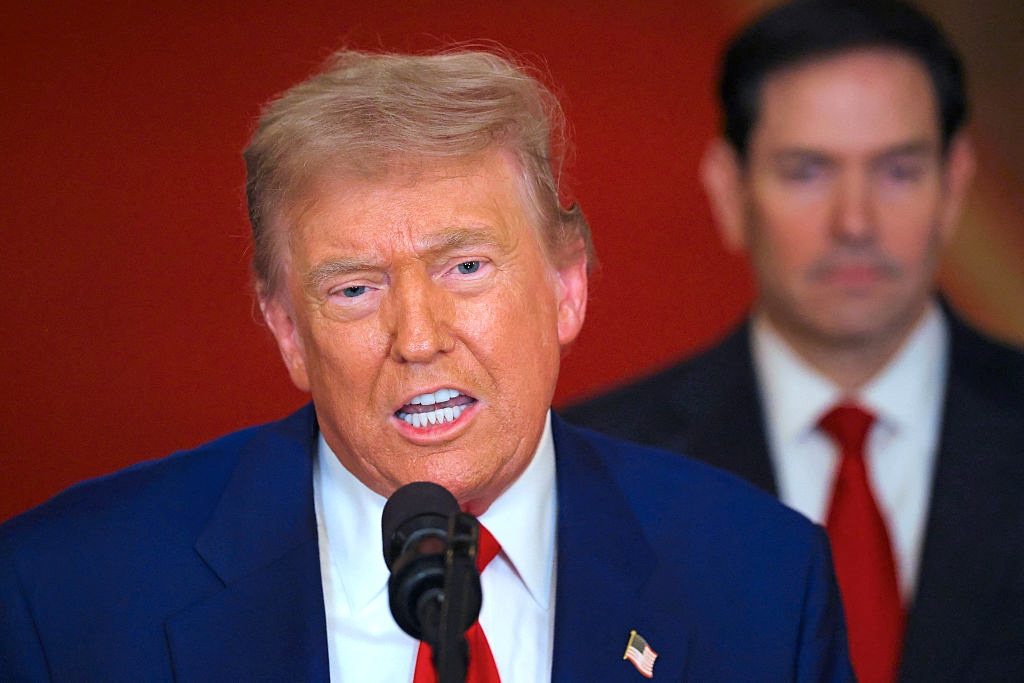
President Donald Trump addresses the nation from the White House in Washington, DC, on June 21, 2025, following the announcement that the US bombed nuclear sites in Iran. (Carlos Barria / POOL / AFP via Getty Images)
The other shoe has dropped. Donald Trump has ended the will-he-won’t-he mystery of joining Israel’s war against Iran. Always one to choose the grand gesture, the US president has let loose the dogs of war, with B-2 bombers dropping six bunker-buster bombs on all three known Iranian nuclear sites (Natanz, Isfahan, and Fordo). US forces also launched Tomahawk missiles at unspecified Iranian targets.
In a bit of dark irony, the United States conveyed a diplomatic message to Iran saying that its aggression was directed at its nuclear program and not intended to promote regime change. But Trump’s partner in crime, Prime Minister Benjamin Netanyahu, has very explicitly stated that this was Israel’s goal. Trump posted on Truth Social on Sunday, “Why wouldn’t there be a Regime change???” And the US attack seriously weakens the clerical regime, which may lead directly to what the United States denies it advocates: regime change.
The Israeli leader further claimed that Israel’s attack aimed to destroy Iran’s nuclear facilities. That’s only partially true: it is intent on destroying not only the country’s nuclear capability but the entire infrastructure of Iranian society. It has attacked oil depots, the national broadcaster, an airport, and industrial plants. And that’s just in the first phase.