A New Translation Breathes Fresh Life Into Charles Baudelaire
A new dual-language translation of Charles Baudelaire’s The Flowers of Evil offers English readers the best way of appreciating the poet who helped invent modernity.
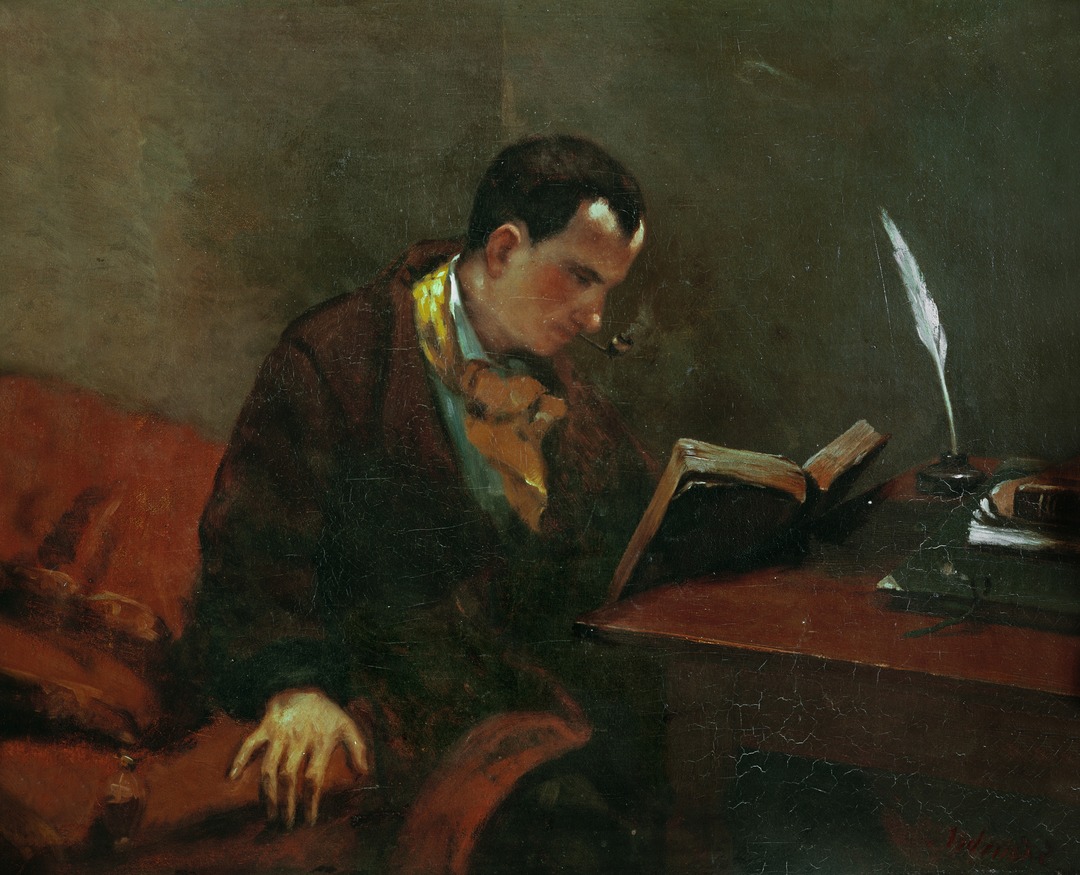
A reproduction of Portrait of Charles Baudelaire by Gustave Courbet, oil on canvas, 1848. Musée Fabre, Montpellier, France. (Imagno / Getty Images)
Despite being born more than two hundred years ago, Charles Baudelaire’s poetry retains the feeling of something contemporary. In Verso Books’ new dual-language edition of The Flowers of Evil (Les Fleurs du mal), translated economically by Nathan Brown, the poet’s contradictory, shape-shifting, and still-startling voice emerges afresh. This is how Brown translates a quatrain from “The Sun” in which Baudelaire likens the poet’s vocation to a sword fight with his own imagination:
I practice my fantastic fencing as I go,
Sniffing every corner for the chance of rhyme,
Stumbling over words like paving stones,
Bumping into lines dreamed long ago.
For Baudelaire, beauty must be fought for. Or as he put it, “The study of the Beautiful is a duel in which the artist cries out with fear before he is vanquished.” This image of the poet as someone at war with the world was one Baudelaire cultivated. He helped to pioneer the modern image of the poètes maudits, or tortured poet, and inaugurated the definitively “modern” project of art as the last refuge of the heroic scoundrel, the ostracized outcast, the individual in search of relief or redemption from the evil and banality of modern life.