Severance Is an Indictment of Workplace Hell
Apple’s dystopian workplace thriller Severance entered its second season as a genuine cultural phenomenon. With its brutal satire of the American corporate structure, it’s easy to see why.
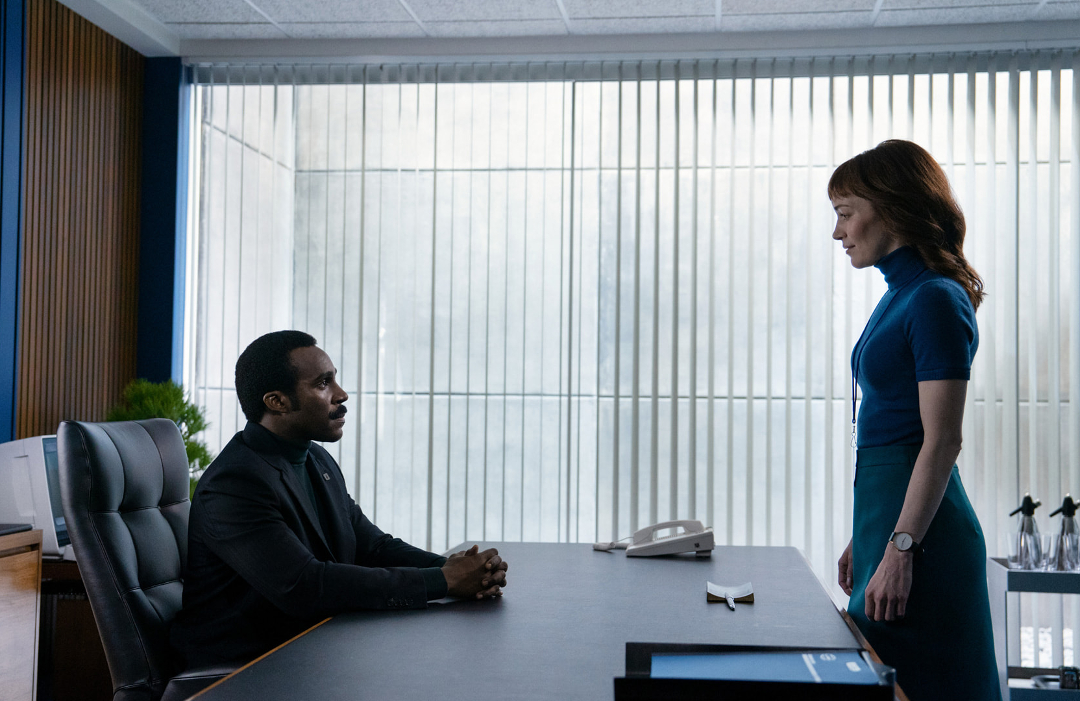
Tramell Tillman and Britt Lower in season 2 of Severance. (Apple TV+)
Severance is probably the best show on television. And I only say “probably” because I can’t possibly watch everything on television for the sake of comparison.
Is there already an online backlash beginning to develop among would-be hipsters? Of course. It must follow as the night the day, as Shakespeare put it, the backlash following anything good becoming popular. Ignore it. The are stronger and weaker episodes, as with every series, but overall the level of excellence is astonishing.
Now nearly through its second season on Apple TV+, with the final episode available on March 21, Severance continues to dazzle. The show’s elective “severance” procedure involves an operation on the brain that cleaves the “work” consciousness from that of the individual’s personal life, so that neither part knows anything further about the other. In theory, this allows people to enjoy their lives unaware of the drudgery of their working hours, while their work selves are mentally clear to focus on their jobs. In reality, the workers are prison labor in unusually sleek surroundings, psychologically tortured to keep them in line.