WNBA Athletes Are Done With Being Underpaid
The WNBA is more popular than ever. On the back of this success, and with rival leagues threatening to outbid it by offering athletes higher pay, the WNBA’s union has decided to use its strong position to renegotiate a contract for better pay and benefits.
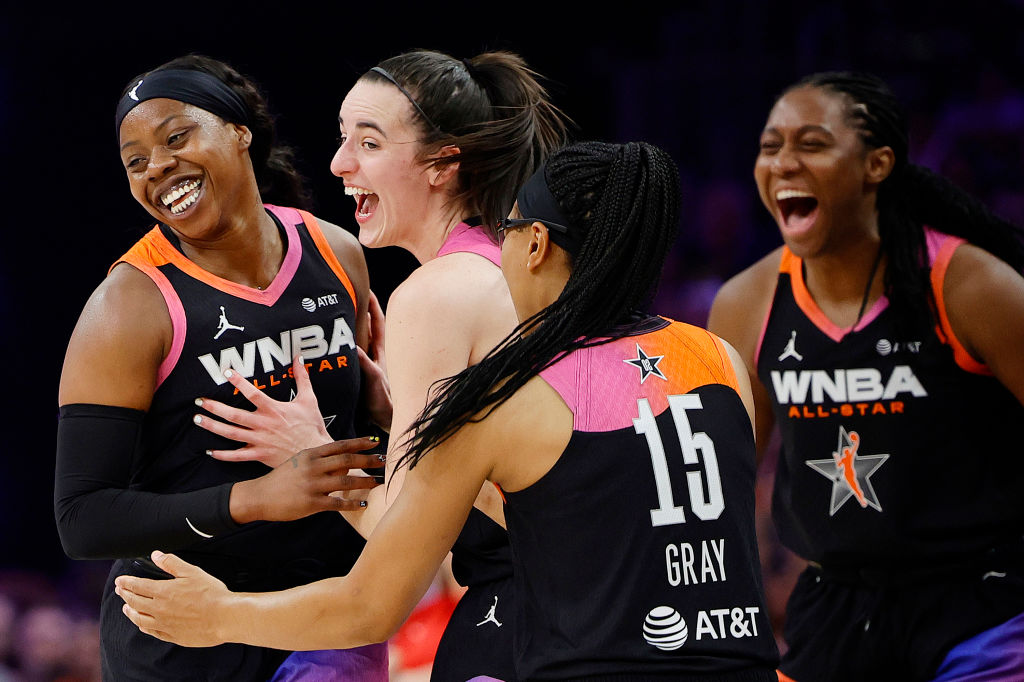
Arike Ogunbowale celebrates a three-point basket with Caitlin Clark and Allisha Gray during the 2024 WNBA All-Star Game on July 20, 2024, in Phoenix, Arizona. (Alex Slitz / Getty Images)
“The North Star is the athlete. Every decision we make has to be built for them.” These are the words of Alex Bazzell, president of Unrivaled, a new player-owned women’s basketball league founded by WNBA stars Breanna Stewart and Napheesa Collier. The objective of the league is to provide increased domestic opportunity for professional basketball players who for years have been forced to spend their “offseason” not at home with their families but playing in foreign leagues in countries like Turkey, Israel, and China just to make ends meet. One may recall the harrowing saga of ten-time WNBA all-star Brittney Griner, arrested on drug charges for a vape cartridge containing cannabis oil and sentenced to nine years in a Russian penal colony. She thankfully only served ten months of this sentence after political intervention by the Biden administration led to her release in a prisoner swap.
Salaries double or sometimes triple their American equivalents incentivize players to take their talents overseas. The WNBA’s minimum salary is just over $66,000, a modest figure in a professional sport where the average career spans only five years. As a relatively new league in a sport where female accomplishment is not traditionally prioritized, the WNBA has lagged far behind the NBA in athlete welfare. Amenities often taken for granted in other leagues, such as charter flights and solo hotel rooms, are only recent realities in the WNBA.
Revenue sharing, which has only existed in the WNBA since 2020, is far less generous than it is in the men’s league, where players have a fifty-fifty split with ownership. WNBA athletes end up taking home a paltry 10 percent of league revenue, in part thanks to the unprofitability of the WNBA. And while for years the league has relied on a combination of both NBA and outside investment to stay viable, the recent broadcast rights deal, proposed game additions, increased sponsorship money, and an influx of young talent look poised to change that. However, when compared to other professional sports, the share of revenue that goes to athletes in the WNBA is abysmal. Even an openly right-wing, nonunionized entity like the UFC — which just settled a $375 million lawsuit over athlete wage suppression — gives around 18 percent of revenue to its fighters.