Rebuilding the Left in One of France’s Poorest Cities
Roubaix used to be home to France’s textile industry — but doesn’t have the same battalions of factory labor as it once did. For France Insoumise, the challenge is to rebuild the Left’s roots in working-class communities.
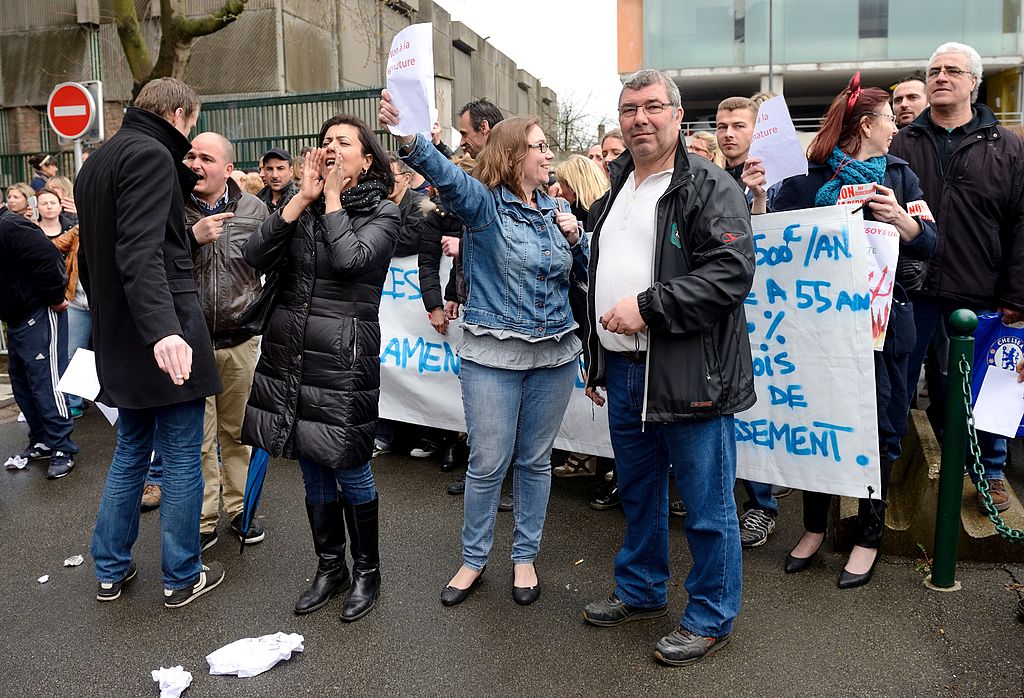
Employees of the French retail company La Redoute take part in a protest against layoffs on March 21, 2014, in front of the company’s headquarters in Roubaix, France. (Denis Charlet / AFP via Getty Images)
France Insoumise has made international headlines for almost a decade, as the leading force on the country’s left. Until its breakthrough in 2022’s parliamentary elections, that success rested largely on the shoulders of leader Jean-Luc Mélenchon. While he has failed to win the presidency, he can be credited with crystallizing most left-wing electors around a radical program of “citizens’ revolution.”
While left-wing parties elsewhere in Europe have mostly faltered, Mélenchon’s campaigns established France Insoumise as a real political force. The election of over seventy MPs as part of the Nouveau Front Populaire in last summer’s snap elections was more proof.
For the establishment, France Insoumise has become a permanent “far-left” scapegoat. It’s also a leading hope for millions of voters who remain loyal to the revolutionary promises of a democratic, social, and republican France.