McCarthyism in the Ivory Tower
Whether the target was communists in the 1950s or pro-Palestine activists today, university administrators have always worked to keep academia in line.
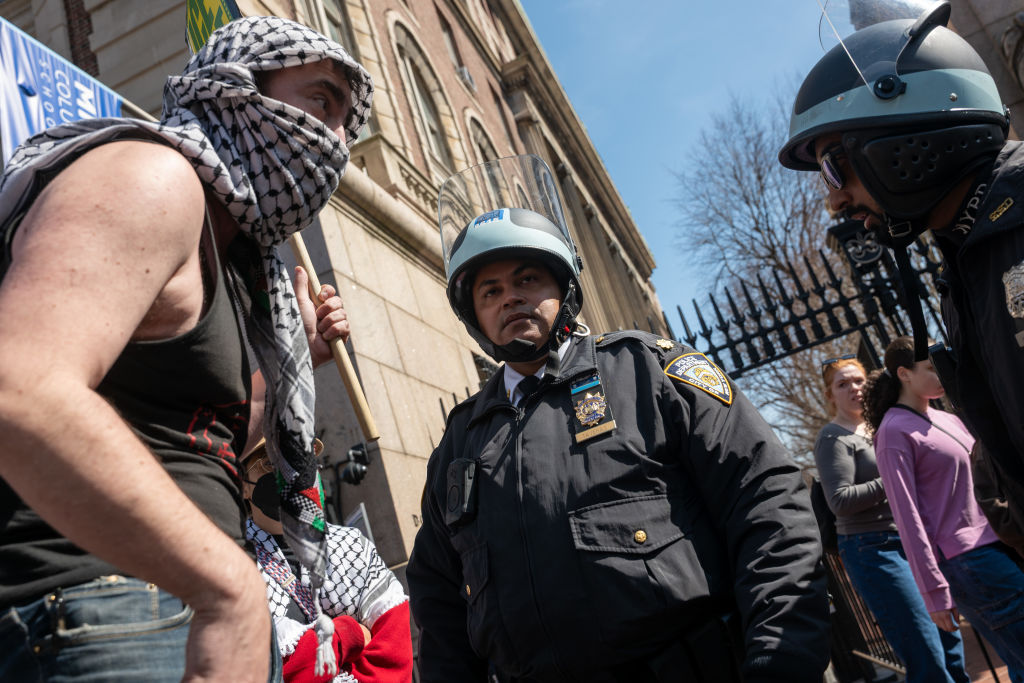
Police interact with a protester as demonstrators rally against the arrest and detention of Mahmoud Khalil outside of Columbia University on March 14, 2025, in New York City. (Spencer Platt / Getty Images)
“The academy did not fight McCarthyism. It contributed to it.” That was historian Ellen Schrecker’s devastating conclusion in her classic study No Ivory Tower: McCarthyism and the Universities, which came out in 1986. Columbia University, while not the worst in Schrecker’s account, was certainly not the best. Today, as the New York Times has revealed, it’s probably the worst.
At the height of the Second Red Scare, just as the House Un-American Activities Committee was beginning its first of many hearings on the threat of communism in higher education, a group of thirty-seven university presidents from the nation’s most prestigious and elite institutions, including Columbia, gathered to make a statement of principles on academic freedom and the Cold War. The year was 1953.
The statement the presidents issued was a disaster. Though claiming to defend academic freedom, their manifesto included sentences such as these: “Free enterprise is as essential to intellectual as to economic progress.”