Cancer Is Killing Our Firefighters
In 2023, the World Health Organization classified the act of firefighting as a Group 1 carcinogen, just like asbestos and tobacco. Both the fires themselves and the very gear firefighters wear on the job are making them sick.
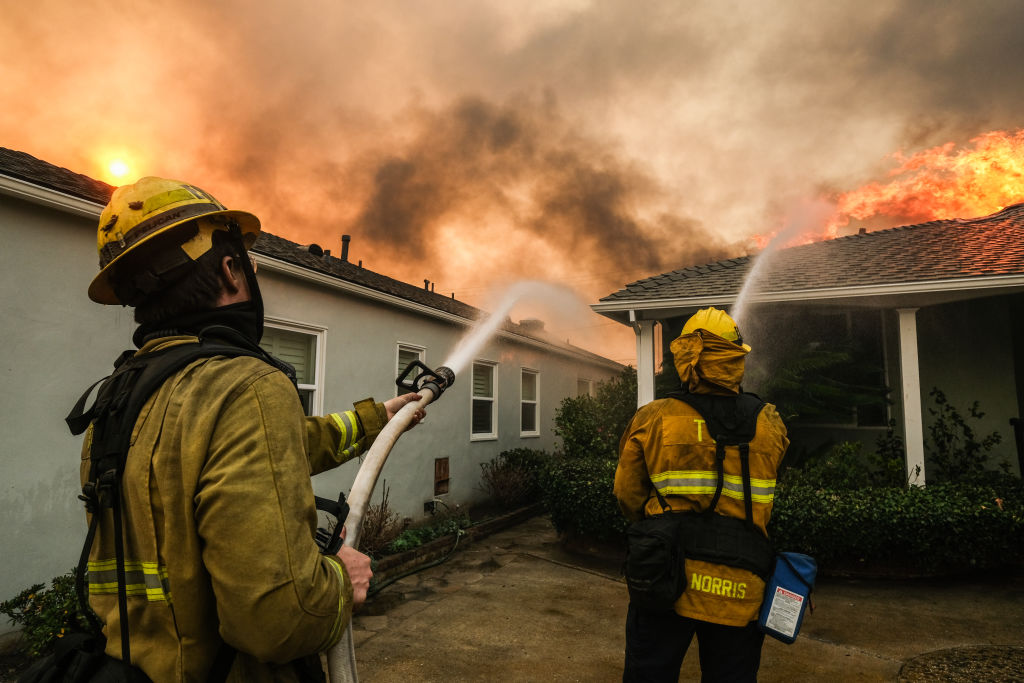
Firefighters aim hoses at a burning house in the Palisades, California, on January 8, 2025. (Jason Ryan / NurPhoto via Getty Images)
Everyone knows that firefighting is a dangerous job — jumping into burning buildings is not for the faint of heart. And because of the inherent risks and the important role they play for the public, it’s not surprising that firefighters are commonly viewed as heroes.
But not only do firefighters face potential death or injury in the line of duty — from the fires themselves, along with structural collapses, diesel exhaust, or even traffic collisions — they also face a hidden, longer-term hazard: occupational cancer, which now claims the lives of more firefighters than any other cause.
Although there are many factors that can lead to a cancer diagnosis, like genetics, lifestyle, or environmental factors, firefighters are diagnosed at a rate almost 10 percent higher than the general population and die from cancer at a rate nearly 15 percent higher. But it’s not just smoke inhalation. Every time a structure is on fire, it has the potential to release toxic chemicals and materials, both from the building itself and from what’s inside. According to Mike Bresnan, president of the International Association of Fire Fighters (IAFF) Local 22 in Philadelphia, “I’ve been in dwelling fires in Philadelphia where there are tires inside burning, there are swimming pools; the contents of the structure now, like the furniture, are all made of plastic — it’s almost like an oil fire. The soot gets on you, it’s all over your clothes, it gets absorbed by your skin. . . . You’re in a Crock-Pot of cancer soup.”