Solidarity Has Saved Spanish Villages After Flooding
Flash floods in eastern Spain last month killed over 200 people. A massive solidarity effort by ordinary Spaniards helped to clean up devastated villages — and shamed the weak response by local authorities.
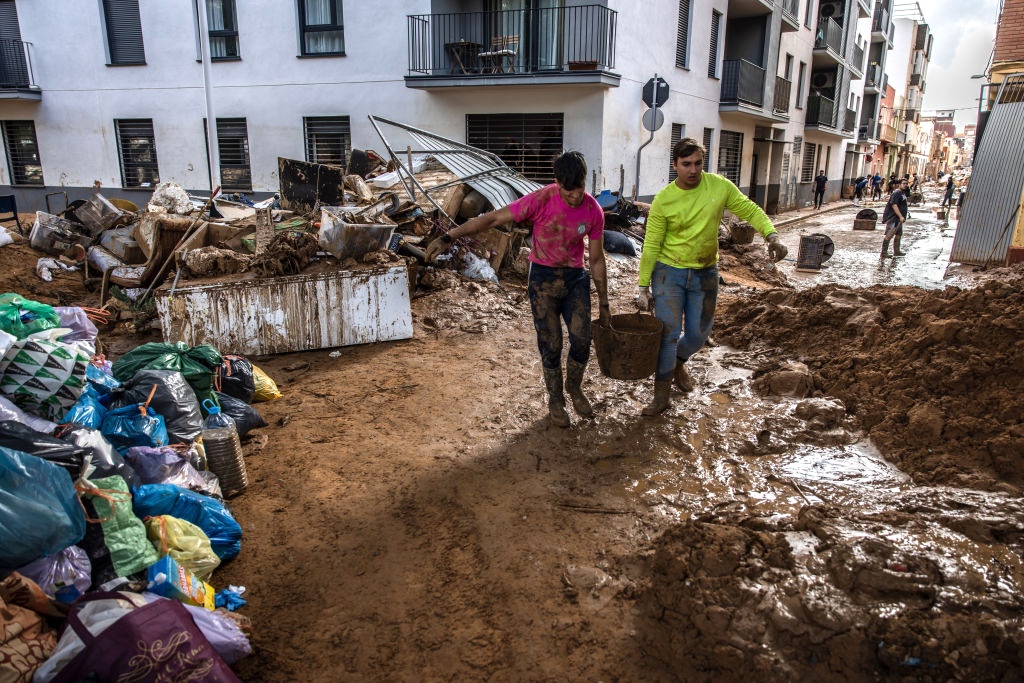
Residents clear flood debris after extreme flooding in Paiporta, Spain, on November 3, 2024. (Angel Garcia / Bloomberg via Getty Images)
“We had no electricity or water. They came, helped remove the mud, emptied their backpacks full of food, flashlights — everything they had — then left and came back the next day. Every single day since the very first day. We have to thank the volunteers.” These are the emotional words of Palmira, the owner of a bakery in Paiporta, one of the towns on the outskirts of Valencia, eastern Spain, devastated by the flash floods on October 29. Thousands of volunteers arrived within hours of the disaster to provide essential supplies and help with rescue and cleanup efforts. This massive display of solidarity, often by people from outside the local area, stands in stark contrast to the institutions today widely distrusted by the public — and the far right’s attempts to exploit the disaster for political gain.
Samuel, Paco, Alfonso, and Aitor traveled ten hours by car from León, in the northwest of the country, to help in any way they could. “Yesterday, we were shoveling out a garage with a group,” Samuel explains. The following day, they roamed the center of Paiporta, asking who needed help. A local resident, whose name they didn’t even know, asked them to help distribute food and basic supplies to elderly people unable to walk through the mud-covered streets. This is how the ecosystem of mutual aid in the town has operated since water and mud destroyed its streets: everyone asks how they can help, and everyone contributes in any way they can.
“This is harder than cleaning,” says Samuel. “A woman grabbed my arm and said, ‘I love you.’ This is psychological aid.” Two weeks after the flood, the initial wave of thousands of volunteers has faded and a sense of loneliness threatens a town still far from recovery. Although the streets are now passable, everything remains covered in mud, and ground-floor homes and businesses are destroyed. “People are in bad shape,” says Dani, a volunteer psychologist managing the line at a food distribution center. “Many are still in shock. Once everything returns to normal, mental illnesses will emerge: post-traumatic stress, depression, anxiety,” he warns, emphasizing the importance of continued outside support for affected communities.