The Gender Polarization of US Politics
Young women overwhelmingly support Kamala Harris.
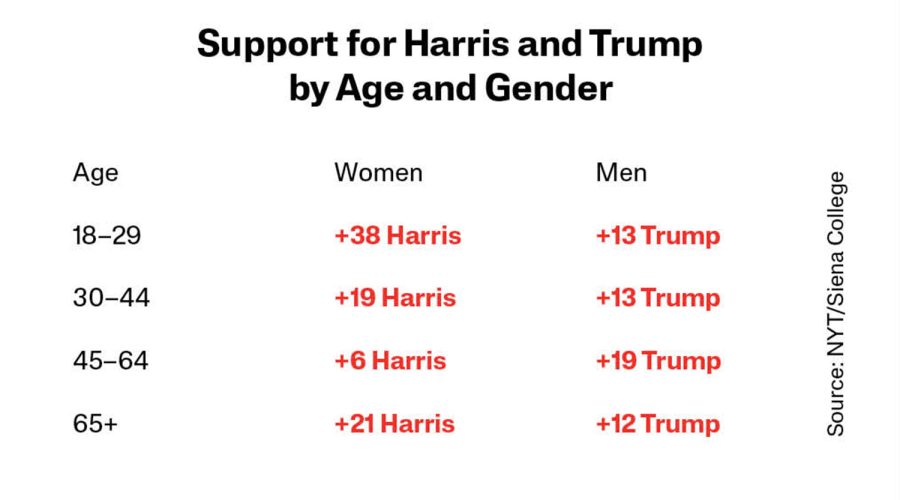
The 2024 election may see the largest gender divide in US history. Before President Joe Biden exited the race, he was up 4 points among women and down 9 points among men; Kamala Harris is losing the male vote by the same margin, but she leads with women by a staggering 11 percentage points. While this split is nothing new, what’s pushing it to unprecedented levels seems to be a rapid polarization among Americans aged 18 to 29. Young women were more liberal than young men by 3 percentage points in 2000 — that gap is now 15%.
Some commentators have attributed this trend to the rise of misogynist “manfluencers” like Andrew Tate, though it seems unlikely that young men’s reactionary attitudes are at fault: most polls show that young women have become much more liberal while their male peers have stayed the same or drifted only marginally to the right. Others point to the end of Roe v. Wade as a consciousness-shaping event for women, but that doesn’t explain why the gender divergence picked up speed as early as 2013. A more compelling approach focuses on the fact that young, working-class men have long been falling behind for decades in terms of employment, education, loneliness, addiction, and suicide rates. These men feel alienated from politics — and may be less likely to vote but more likely to back an “antiestablishment” candidate like Donald Trump, even if their personal beliefs are not all traditionally conservative.