Nationalize Psychedelics
Psychedelic-assisted therapy is still awaiting official approval, but private firms are already using patents to corner the market. Government-funded research shouldn’t yield big profits for Big Pharma.
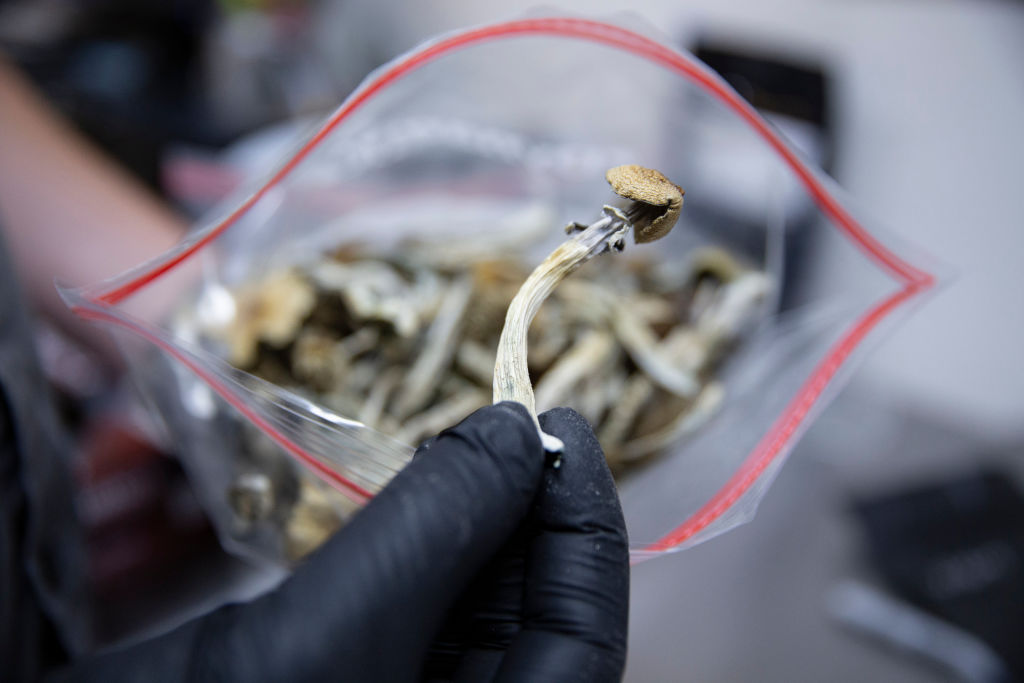
A laboratory technician displays hallucinogenic psilocybin mushrooms at Rose City Laboratories in Portland, Oregon, on July 13, 2023. (Moriah Ratner / Bloomberg via Getty Images)
There were high hopes that MDMA-assisted therapy would be approved by US regulators in 2024. The data showed that the drug-therapy combo significantly reduces post-traumatic stress disorder (PTSD) symptoms, or even eases them completely — despite a strong placebo effect in the trials, which involved well under a thousand participants. When the study data was published in September 2023, the New York Times reported that MDMA-assisted therapy was “inching closer to approval.” But in an August ruling that came as a wake-up call to figures in the nascent psychedelic industry as well as an underlying psychedelic movement made up of a hodgepodge of campaigners, the Food and Drug Administration (FDA) declined to give the green light, citing a lack of convincing clinical evidence and issues with the studies. The FDA requested further data from a new study, which would take several years, marking a significant setback for the prospect of medical psychedelics.
As early as 2026, however, the FDA will likely have another opportunity to approve another psychedelic drug for Americans with depression — psilocybin, which is derived from magic mushrooms — depending on the results of late-stage research. Even if it does pass, the therapy will likely not be immediately covered by insurance and so will remain beyond the reach of most Americans. This reality, plus the fact that psychedelics are meant to make you feel more interconnected (and thus perhaps less likely to want to squeeze profits from your peers), raises an intriguing possibility: that the psychedelics industry could be nationalized for the public good.
Patients Before Patents
“Psychedelics, like pharmaceutical products, are just going to be inaccessible to many, many people,” says Professor Susi Geiger, a patent expert from University College Dublin. Step one to ensuring equitable access, and giving hospitals some respite from the straightjacket that often forces them to pay well over the odds for drugs, is reforming a patent system that enables Big Pharma to hike prices on existing drugs cartel-style thanks to the monopolies they enjoy over their products. To prevent the far-out possibility of Google founder Sergey Brin controlling the price of certain psychedelic therapy protocols, Geiger suggests a complete moratorium on private patents over psychedelics. “That’s the equivalent of nationalizing it at the source and keeping it as a public good.”