Keir Starmer Will Always Side With Capital Against Workers
A recent controversy involving DP World showed how keen Keir Starmer’s government is to prostrate itself before firms that trample over workers’ rights. Starmer’s economic agenda relies heavily on “de-risking” private investment with public money.
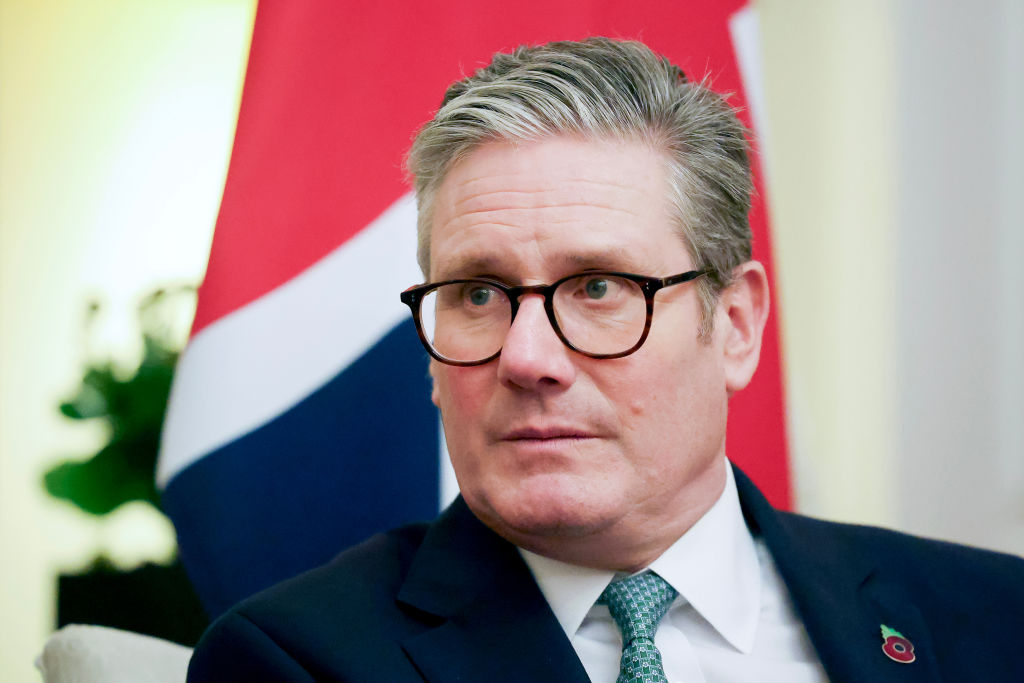
Keir Starmer at 10 Downing Street in London, UK, on October 28, 2024. (Andy Rain / EPA / Bloomberg via Getty Images)
When Keir Starmer’s Labour Party won office in July of this year, there was precious little in the party manifesto that offered hope that things were going to get better. Two promises that stood out amidst nearly 150 pages of vague platitudes were a commitment to rebuild Britain’s “crumbling” infrastructure and a range of reforms to workers’ rights.
Both pledges were thrust onto center stage in early October as Labour unveiled its “Make Work Pay” legislation. At the same time, Starmer prepared for an investment summit at which DP World, which describes itself as “a leading provider of smart logistics solutions,” was due to announce a £1 billion investment in its London Gateway port in Essex.
On October 9, Transport Secretary Louise Haigh denounced DP World’s subsidiary company P&O Ferries as a “rogue operator” for illegally firing 786 staff in 2022 and replacing them with agency workers on lower pay. Within days, DP World had decided to shelve the London Gateway announcement, leading to a flurry of corrections from government sources.