In Georgia, a National Election Is a Geopolitical Struggle
Georgian liberals hope Saturday’s election will see a shift toward pro-EU parties. Yet the Georgian state’s dependence on bigger powers is making the country’s politics part of a wider geopolitical contest, as tensions rise between the US, Russia, and China.
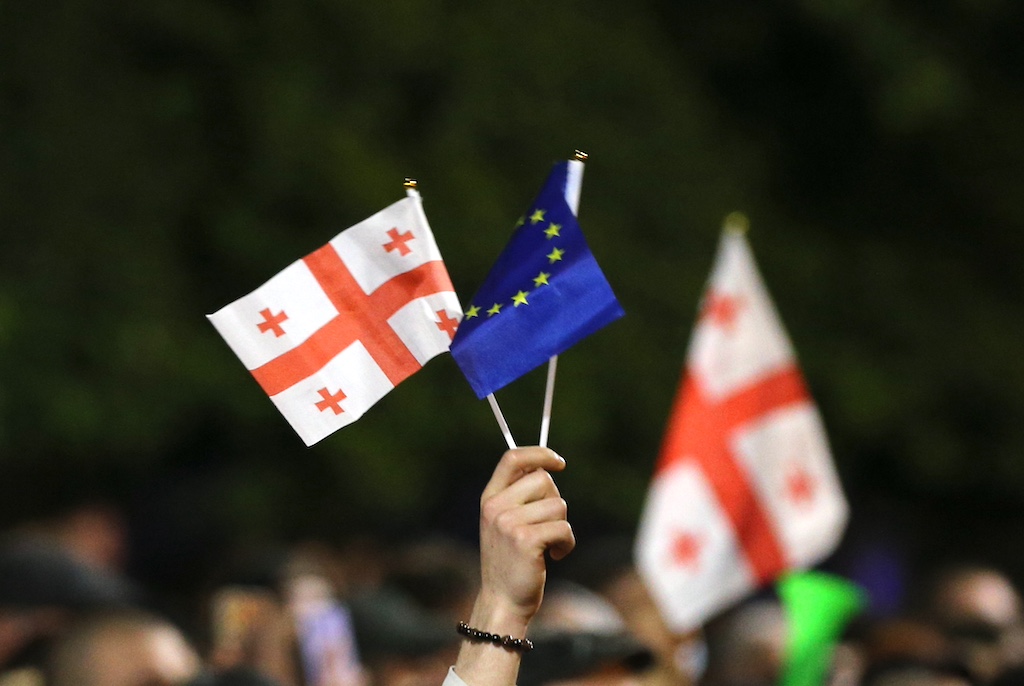
Parliamentary elections are being held on October 26, 2024, in Georgia. (Davit Kachkachishvili / Anadolu via Getty Images)
In Georgia’s capital, Tbilisi, billboards for fast-food chains and home-improvement stores have given way to politics. Slogans for parties vying for votes in Saturday’s parliamentary elections are everywhere. The media is no different — pro-government and opposition outlets are each scrutinizing daily events with palpable confidence that their side will win.
Depending on who you ask, much hinges on the outcome. This vote is said to be about Georgia’s future EU membership, peace, territorial integrity, economic growth, and even democracy itself. Both government and opposition capitalize on fears of another war with Russia like in 2008, yet provide opposing strategies for peace.
Preelection politics aside, Georgians routinely rank economic issues as their most pressing concern. The broader population is more moderate and balanced when it comes to foreign policy than categorical talking points suggest, wanting peace with Russia and good ties with the West. Yet more existential fears dominate Georgian political discourse. The upcoming election is no different, framed by all sides as a critical referendum on the nation.