Georgia’s Transition to Joining the West Will Never End
For decades, Georgian neoliberals have justified obedience to Washington, relentless pro-market reforms, and soaring inequality in the name of Westernization. But Russia's war has only revived claims that Georgia needs to bind itself tighter to the West.
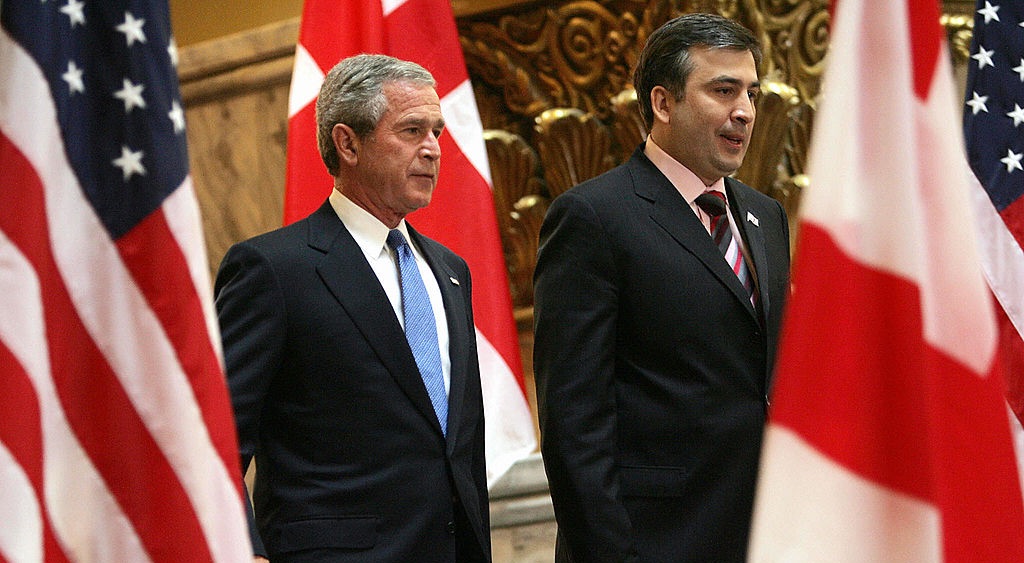
George W. Bush and Georgian president Mikheil Saakashvili walk to a press conference in Georgian parliament in 2005. (TIM SLOAN/AFP via Getty Images)
For decades, Georgia has been involved in territorial conflict over Abkhazia and South Ossetia, regions each currently run by separatist governments. The Russian invasion of Ukraine on February 24, nominally in support of comparable statelets, thus naturally raised alarm signals in this small South Caucasus country.
In August 2008, under Mikheil Saakashvili’s leadership, Georgia attempted to take full control of South Ossetia. It shelled the regional capital Tskhinvali, sparking a twelve-day war with Russia. A French-brokered cease-fire ensured Russia withdrew, but not from the two statelets; shortly after, Moscow recognized their independence while providing them with economic support and an enduring military presence.
This left behind a “frozen conflict,” ever ready to resume. Yet despite paranoia that today’s war in Ukraine could spread here — with Moody’s even cutting Georgia’s credit rating — neither South Ossetia, Abkhazia, nor Russia have shifted their military posture. Before his defeat in this month’s election, South Ossetia’s leader, Anatoly Bibilov, announced plans for a referendum to join Russia, which is currently mooted for July 17, while Abkhazia’s government, despite its support for Russia’s war, refuted speculation about any similar poll.