Did the Thirty Years’ War Produce Capitalism?
The podcast Chapo Trap House’s miniseries Hell on Earth is an entertaining story which proposes that the Thirty Years’ War midwifed the birth of capitalism. Ultimately, however, the interesting argument doesn’t hold up.
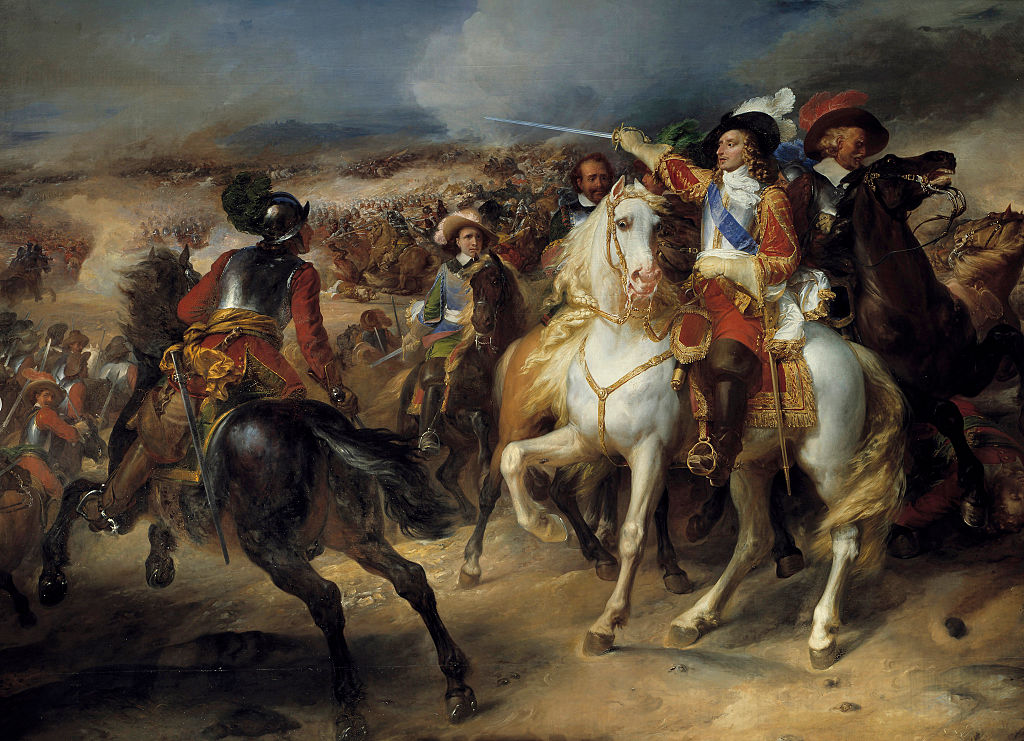
Painting of Louis II de Bourbon at the battle of Lens, August 28, 1648, during the Thirty Years’ War by Jean Pierre Franque, circa 1835. (Leemage / Corbis via Getty Images)
The experience of the Thirty Years’ War (1618–48 CE) doesn’t have much cultural resonance outside of central Europe. Perhaps this is surprising, given that it has the macabre distinction of being, in proportional terms, the most lethal conflict in modern European history. An average of 20 percent of the population in affected areas didn’t survive, a figure worse than either world war.
The war is probably better known for how it ended, since the Peace of Westphalia has been enshrined by some as the origin of the modern system of international relations. Recent literary and cinematic depictions of the war’s history are few and far between, with the most notable being the 1971 film The Last Valley, a film based on the novel of the same name starring Michael Caine and Omar Sharif that bombed at the box office.
It’s unexpected, then, that the podcast Chapo Trap House recently completed a miniseries revisiting the conflict, Hell on Earth: The 30 Years War and the Violent Birth of Capitalism. The podcast, known more for its irreverent commentary on today’s politics, promises to explain “the story of the long crisis of the 17th century, the birth of Protestantism and the collapse of Catholic Christendom, and ultimately, the gleaming T-800 Terminator skeleton of Capitalism emerging from the rotting corpse of Feudalism.”