Emmanuel Macron Is Using the Far Right to Bolster His Power
Since his first presidential campaign in 2017, Emmanuel Macron has presented himself as the only barrier to chaos. But this snap election has shown how much Macron has helped build up the far-right threat in order to entrench his own power.
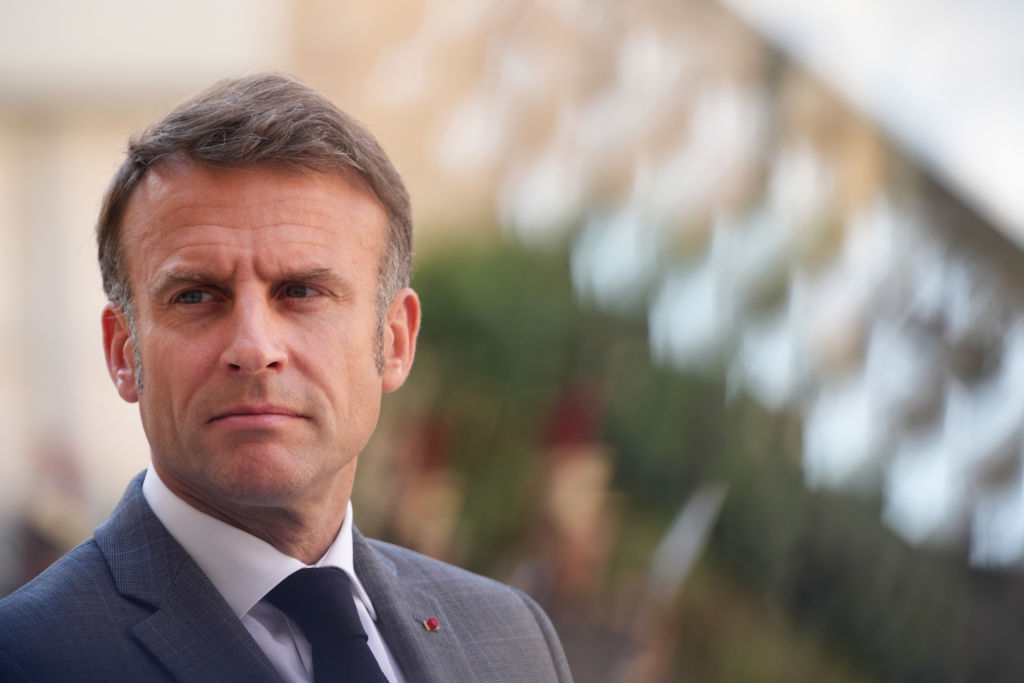
French president Emmanuel Macron, at the Élysée Palace in Paris, France, on Monday, June 24, 2024. (Nathan Laine / Bloomberg via Getty Images)
Investigative journalist Marc Endeweld is one of the most informed observers of French president Emmanuel Macron. In a series of works, he has examined the political intrigue that fueled Macron’s dizzying rise to the summit of the state — before he dragged his country into the depths where Marine Le Pen’s far-right Rassemblement National is today at the gates of power.
The first of these books, L’ambigu monsieur Macron (2015), was written when the future president was still economy minister in François Hollande’s Parti Socialiste–led government. Macron’s notorious statement, when he occupied that role, that he wasn’t a socialist marked the public beginning of his so-called outsider campaign for the 2017 presidential election. In fact, he wasn’t really such an upstart candidate. Boosted behind the scenes by right-wing networks surrounding former president Nicolas Sarkozy — and with more than a leg up from his politically influential wife Brigitte — Macron won only after the murky political elimination of his main conservative rival, former prime minister François Fillon, who was revealed to have embezzled public funds by fictitiously employing his wife as a parliamentary assistant.
Macron, says Endeweld, has one overriding drive: a thirst for power. And he’s methodically pursued that ambition with another aim in mind: the eradication of the Left. He spoke to Jacobin’s Marlon Ettinger about the president’s apparently baffling move to call snap elections despite poor poll scores, his remaking of the French political system, and the networks of power behind his rule.