In Parade, Rachel Cusk Turns a Harsh Eye to the Art World
Throughout her career, Rachel Cusk has been a forensic chronicler of her own middle-class neuroses. Parade, her latest novel, transmutes the brutal self-examination that she perfected in her memoirs into fiction.
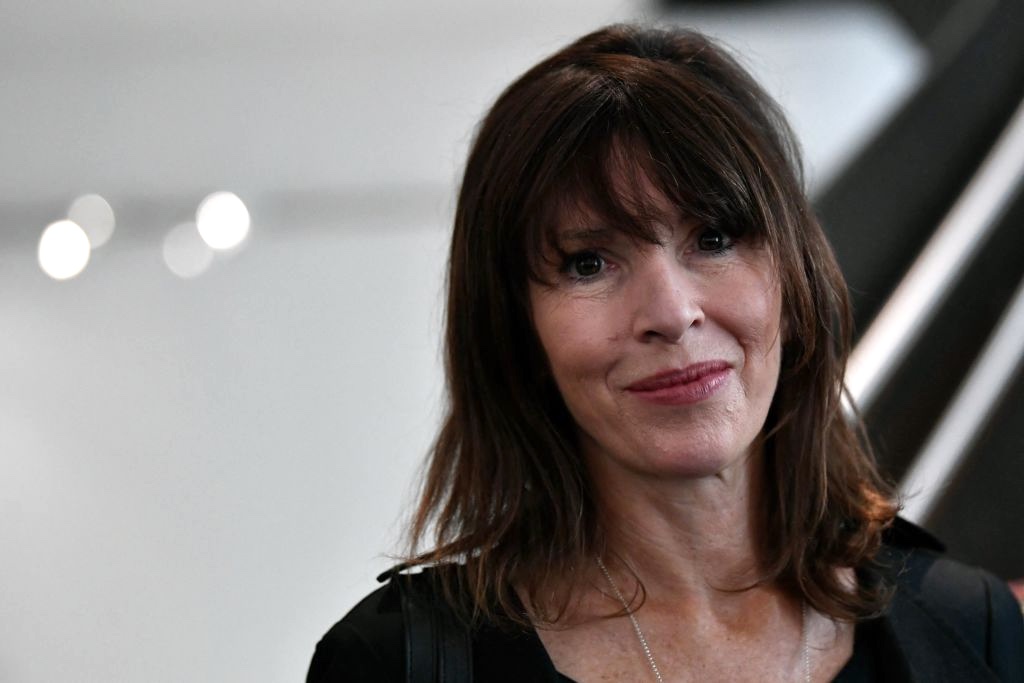
Canadian writer Rachel Cusk in Paris on November 7, 2022. (Stenphane de Sakutin / AFP via Getty Images)
With the publication of each of the books that would make up Rachel Cusk’s loose trilogy of memoirs — A Life’s Work, The Last Supper, and Aftermath — she was greeted with a flurry of outrage and condemnation. Critics charged her with being both middle class and a narcissist — qualities so close to universal for writers that it’s confusing why they even merited mentioning. The novelist Jane Smiley said of Aftermath that Cusk’s account of her divorce from the father of her children “reads like a tantrum — an erudite and eloquent tantrum, but a tantrum nonetheless.”
In that book, Cusk complained of having to offer financial support to her husband, who’d abandoned his career to raise their kids, and maintained that she was entitled to sole custody. She resented having to be both the man and woman in her relationship, later wondering if what she ultimately wanted was “male authority.” Aftermath is angry and unreasonable, contradictory but also one-sided. In other words, she captures her own subjectivity — a literary feat so difficult to pull off it might only be possible because of Cusk’s lack of self-awareness. “I perceived in the sentimentality and narcissism of motherhood a threat to the objectivity that as a writer I valued so highly,” she said soon after completing Aftermath.
A Life’s Work, Cusk’s account of early motherhood after the birth of her second daughter, was similarly controversial. In a lengthy Guardian article, the author responded point by point to her critics — the wave of harsh reactions to her work had clearly irked her. One charged Cusk with damaging the reputation of motherhood and lambasted her for “confining [her daughter] to the kitchen like an animal.” Cusk herself seemed undecided about how austere the whole experience was. At points she described the country home in which she and her daughter were “confined” as both bucolic and serene only to go on to write, without skipping a beat, that “adversity” was the central experience she sought to capture. The adversity in question was having to move between an attic and a local vestry to find writing space. It is true that daily life, even in its most suburban form, is full of mundane hardship and suffering, and Cusk pins these down with razor-sharp precision, precisely because she is so completely un-self-aware of her circumstances.