How Racist Theme Park Rides Became Dutch National Icons
Efteling is a popular fairy-tale-based theme park in the Netherlands that is now at the center of a heated culture war. The conflict centers on the park’s blatantly racist caricatures — but right-wingers claim Dutch culture itself is under attack.
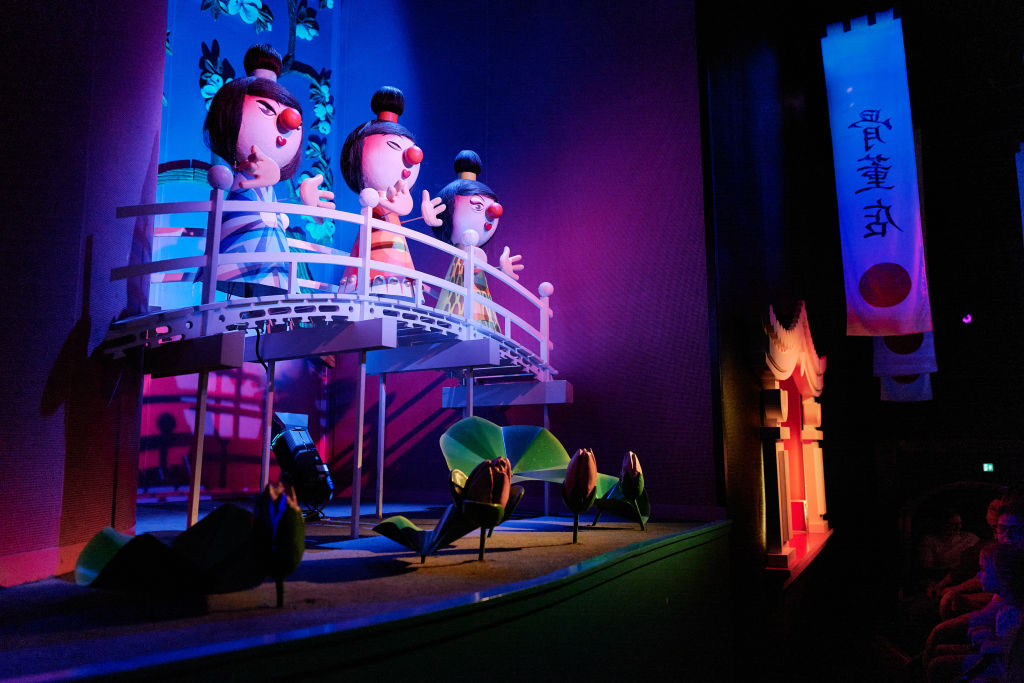
A scene representing Japan in Efteling on August 9, 2023 in Kaatsheuvel, Netherlands. (Pierre Crom / Getty Images)
On an episode of De Avondshow met Arjen Lubach — the Dutch equivalent of John Oliver’s Last Week Tonight — the titular host stitches together interview clips with right-wing leader Geert Wilders, to make a comprehensive list of everything the newly crowned election winner doesn’t like. There’s judges, journalists, the Islamization of the West, the Quran, jihadists, refugee centers, mass immigration, the “Moroccan problem,” the Dutch government, left-wing dictatorship, the multicultural elite, Brussels, and Prime Minister Mark Rutte. Asked what he does like, Wilders offers a childlike smile: “I’m a big fan of the Efteling.”
Granted, he’s not the only one. According to surveys, a massive 94 percent of Dutch citizens have visited this fairytale-based theme park in North Brabant province at least once in their lives. In 2018, it attracted a whopping 5.3 million visitors. During its seventy-two-year existence, the Efteling has become so integral to Dutch culture that one reporter spent over forty hours wandering past giant toadstools and gingerbread houses in search of the Netherlands’ “soul.”
The Efteling owes much of its success to its original designer. That was an early twentieth-century draftsman named Anton Pieck, known for his romantic illustrations of Grimm’s Fairy Tales, One Thousand and One Nights, and other lesser-known stories from European and Arabic folklore. Pieck spent much of his career in the shadow of modern art movements that saw his stubbornly traditionalist style — a mix of Hendrick Avercamp and Heinrich Kley — as immature and outdated, more kitsch than kunst. But a breakthrough arrived toward the end of his life, when he agreed to help a parish in the sleepy Brabant town of Kaatsheuvel build an interactive fairytale forest, turning his drawings of Sleeping Beauty and Hansel and Gretel into sculptures and animatronics. His art, which critics once derided as cookie-tin decoration, proved a huge success with children and adults seeking escapism in postwar Europe. Today, the Efteling — named after a local inn — boasts over sixty attractions, including numerous dark rides and rollercoasters that give Disneyland a run for its money.