Colombia’s Coal Embargo on Israel Is a Model to Follow
Colombia was the biggest coal exporter to Israel — but last Saturday, president Gustavo Petro announced he would cut off the supply. The Colombian mobilization against the genocide in Gaza has shown the world how to put material pressure on Israel.
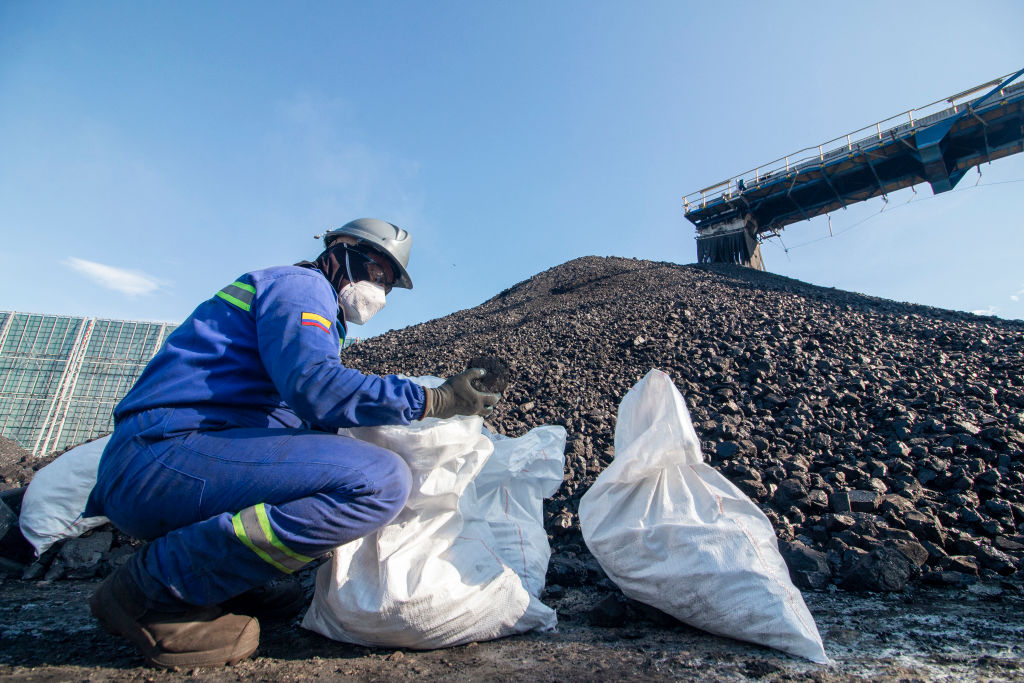
A worker collects pieces of coal in the port city of Cartagena, Colombia, on June 13, 2024. (Schneyder Mendoza / AFP via Getty Images)
On June 8, Colombian president Gustavo Petro announced that his country will suspend coal exports to Israel until the genocide stops. Colombian coal accounted for more than 60 percent of all coal supplied to Israel in 2023, and the Israeli power grid depends on coal for 22 percent of its output. The same grid supplies electricity to Israel’s illegal settlements and arms factories as well as infrastructure used by the Israeli military in perpetrating genocide against Palestinians in Gaza.
With Colombia being the largest coal exporter to Israel, this decision is not only a victory in symbolic terms but shows the enormous impact that a wider energy embargo could have in ending Israel’s genocide in Gaza, as well as the power of the transnational organizing that brought the decision about.
Only a few weeks into the genocide, the largest Colombian mine workers’ union, Sintracarbón, responded to a call for solidarity from the Palestinian trade union movement, issuing a statement demanding the halting of Colombian coal exports to Israel. In raising this demand, the miners also highlighted Israel’s nefarious role in training paramilitaries and mercenaries responsible for widespread atrocities in Colombia, and rallied workers globally to