Sweden’s Unions Need to Wake Up to New Forms of Exploitation
In Sweden, thousands of migrant construction workers have to deal with employer blackmail and attempts to cheat them out of their pay. Unrepresented by the traditional trade unions, they are resorting to more direct forms of class struggle.
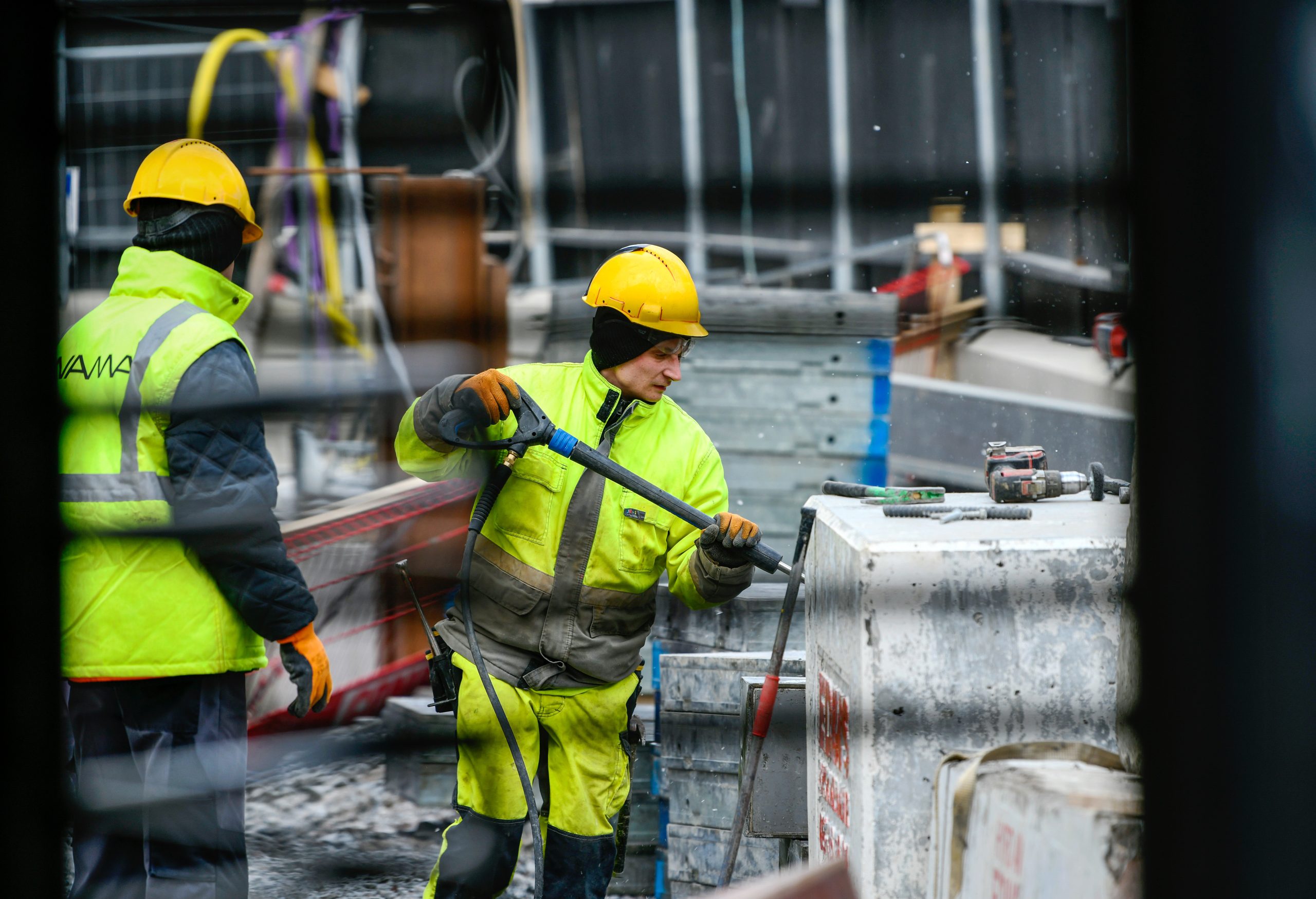
Construction workers working in Stockholm, Sweden, on March 5, 2019. (Mikael Sjoberg / Bloomberg via Getty Images)
“Work — done! Wage — unpaid! Swindler — we’ll get you, be afraid!” echo the voices of about twenty construction workers, clad in matching yellow safety vests and hard hats. It’s a misty day in February, and they’re blocking the access road to a Stockholm construction site.
The workers, migrants from half-a-dozen mostly post-Soviet countries, shout their slogans in Russian. The scene reveals quite how much the Swedish labor market has changed in recent years. Two of the workers are owed around $30,000 in unpaid wages by an elusive subcontractor active on the site. “It’s not just about the money,” Roman Ramazanov, one of the cheated workers says. “It’s also about putting a stop to this racket.”
Their form of protest, known as an “extractive blockade,” was common in the early days of the Swedish labor movement, halting or hindering work at a given site to force an employer to pay outstanding wages. Since then, it largely fell into disuse, as wage theft and similarly blatant forms of exploitation were eradicated. This was an achievement of the Social Democratic Party, who dominated the country’s politics for most of the twentieth century, and its affiliate, the Swedish Trade Union Confederation (LO), which came to unite most Swedish workers.