Lætitia Sadier Talks to Jacobin About Revolutionary Love
Since her days as a founding member of avant-pop band Stereolab, Lætitia Sadier’s music has engaged with everything from world-systems analysis to the surrealists. In an interview with Jacobin, she explains why she’s a radical but not a savior.
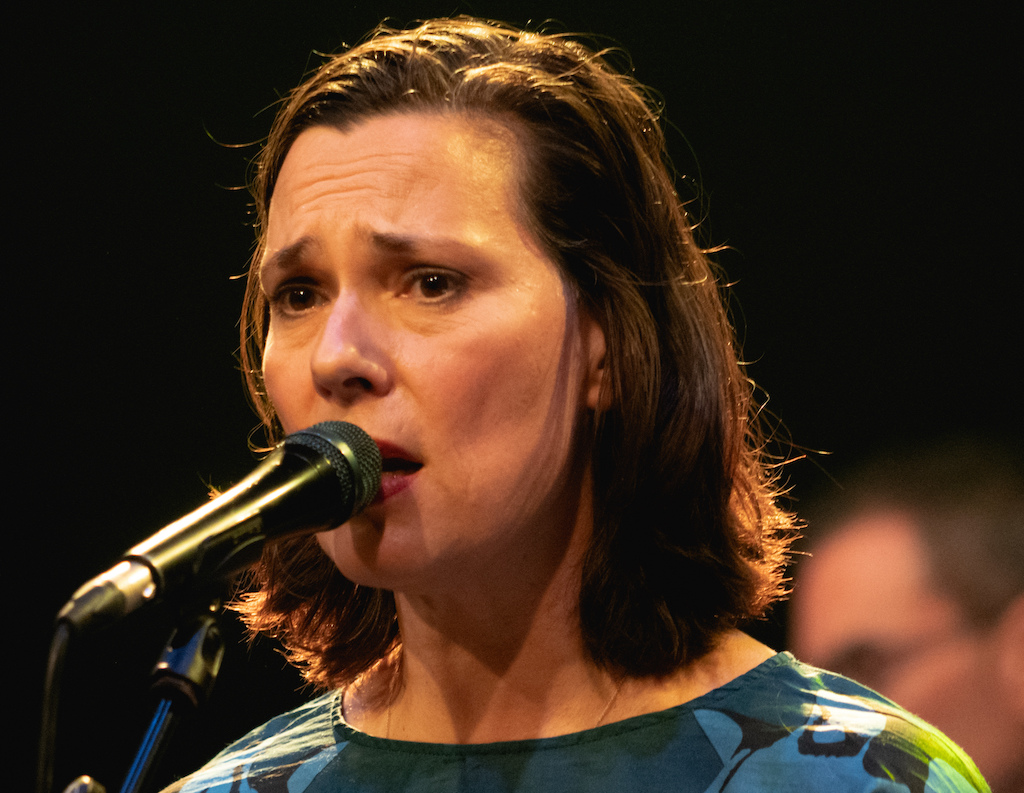
Lætitia Sadier performing in 2021. (Wikimedia Commons)
Lætitia Sadier may be our chanteuse for the end of the world. As cofounder and lead vocalist of the avant-pop band Stereolab, she has never shied away from politics, whether on albums by her band or through solo work since her debut, The Trip, in 2010. Stereolab, which formed in 1990 and recently regrouped in 2019 after a ten-year hiatus, established its left-wing credentials on LPs like Mars Audiac Quintet (1994), Emperor Tomato Ketchup (1996), and Dots and Loops (1997), with music that lyrically engaged with elements of world systems analysis, Situationism, and Surrealism, frequently backed by a compelling Krautrock, motorik beat. Rock critic Robert Christgau famously dismissed Stereolab’s recordings as “Marxist background music” — a label that only further endeared the band to fans, both politically and artistically.
Sadier’s new album, Rooting for Love (Drag City), is markedly different from her work thirty years ago. Yet she hasn’t lost her radical worldview. In this instance, she levels her critical eye at the social and cultural crises brought on by COVID-19, the far right in Europe, and imminent environmental collapse. Amid the LP’s layered compositions and sutured sound collages is an unmistakable political message: Sadier situates love as a solution for these predicaments. With its textured, synth-pop melodies and nocturnal atmosphere, Rooting for Love might be described as lounge music for the apocalypse.
Following in the tradition of forerunners like Alexandra Kollontai, this isn’t a typical love song album, but one rooted and routed through ideas of resistance and radical social change, which Sadier delineates with style and conviction. She spoke to Christopher J. Lee about her approach to love and its revolutionary potential.