Archaeologists Are Organizing to Dig Out of Poverty Wages
Field archaeologists work physically demanding jobs exposed to the elements, often for low pay and meager benefits from private employers. We spoke to one self-identified “dirty shovel bum” about why he and his coworkers are organizing.
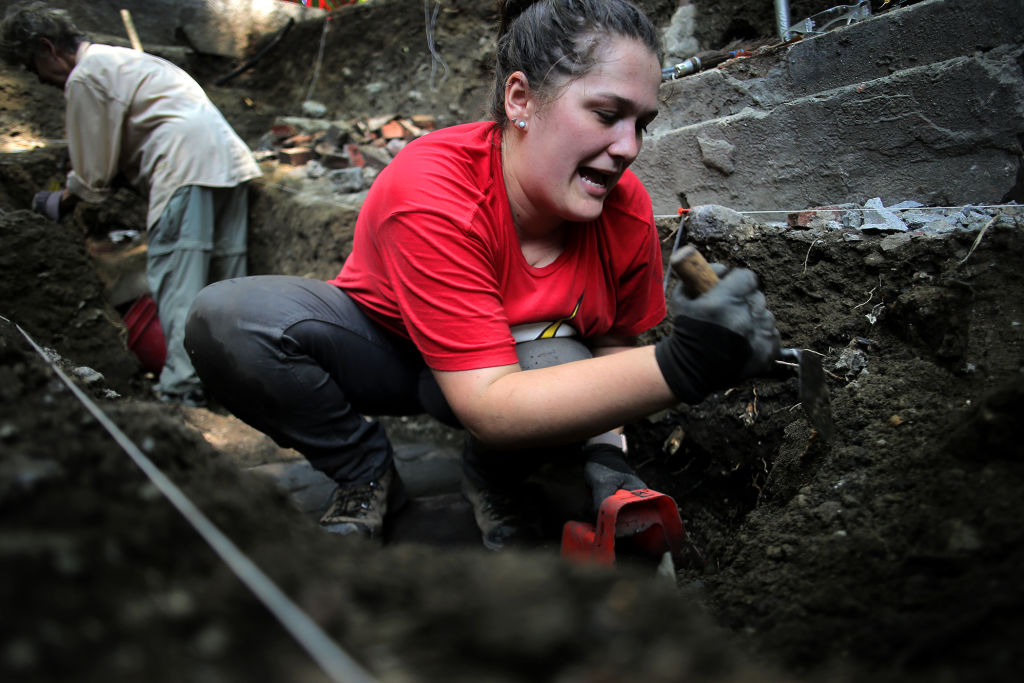
Archaeologist Melissa Ritchey excavates a site scheduled for development in the Chinatown neighborhood of Boston, on July 26, 2019. (Lane Turner / Boston Globe via Getty Images)
On March 27, a team of archaeologists voted in a union election overseen by the National Labor Relations Board (NLRB). The small team, which was deciding on whether to unionize with Teamsters Local 222, is based in Salt Lake City, Utah, where its members are employed by SWCA Environmental Consultants, a global environmental consulting firm. Archaeologists in the cultural resource management (CRM) sector in the United States, the majority of the archaeological workforce in North America, mostly work for low pay and meager benefits, all while braving the elements to survey mile after mile of land on foot. They have plenty of reasons to organize.
Ten people voted in the NLRB elections, but four votes are still being contested. Of the remaining six, the count went 5-1 in favor of unionizing. While that means that the workers cannot yet declare victory, SWCA archaeologist Freeman Stevenson is confident. He said that at least one of the “no” votes among the contested ballots is from a supervisor whom the Board previously declared ineligible to be in the bargaining unit, and once that vote is thrown out, it will be an outright win.
It’s a small bargaining unit, but SWCA Incorporated has some twenty offices across the country that employ archaeologists, and some of those other locations are seeing union drives too. Workers at SWCA’s Pittsburgh office filed for an NLRB election this week, with Teamsters Local 341. Archaeologists based in Maryland at Goodwin and Associates, another CRM firm, also filed for an NLRB election this week, with Teamsters Local 992 (archaeologists in Canada, too, have notched wins in recent years). Jacobin’s Alex N. Press spoke to Stevenson about the work of archaeology in the twenty-first century and why archaeologists should organize. The conversation has been lightly edited for length and clarity.