No, Leo Varadkar Was Not a “Progressive”
Since he resigned last week, Irish prime minister Leo Varadkar has been hailed by liberal media as the representative of a modern, forward-looking Ireland. Yet he was above all an ally of corporate elites, not people in need of housing and health care.
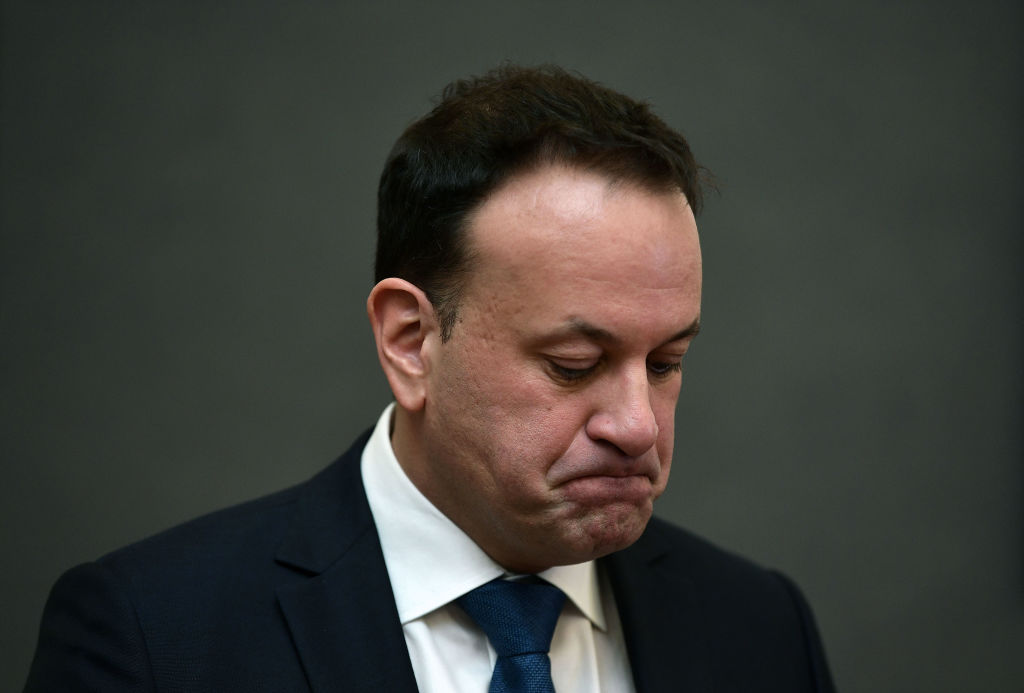
Taoiseach Leo Varadkar speaks to the media on March 9, 2024, following the failure of two government-backed referendums on family and care. (Charles McQuillan / Getty Images)
Since Leo Varadkar announced his resignation as Ireland’s taoiseach (prime minister) and head of the Fine Gael party on Wednesday, media have already begun writing his political legacy. For some, Varadkar will be remembered as an “astute, courageous leader during challenging times,” in light of his relative competence during Brexit negotiations with the European Union and the United Kingdom. Unlike many of his diplomatic interlocutors (in Belfast and London, particularly), he and his government demonstrated a consistent awareness of the politically incendiary and pragmatically untenable implications of a “hard border” on the island of Ireland. They successfully worked, under trying circumstances, to avert this outcome. As the Guardian notes, “Mr Varadkar stood up both to the unionists [in the North of Ireland] and to London when it mattered.”
At a more general level, an opinion piece in the same newspaper praises Varadkar’s diplomatic skills — comparing him to New Zealand’s former Labour Party leader, Jacinda Ardern, and casting both as exemplars of a progressive liberalism for the twenty-first century. The BBC likewise describes the outgoing taoiseach as a public figure who “championed referendums to change the Irish constitution legalising same-sex marriage and abortion.” It cites Varadkar’s own words, that he was “proud” to “have made the country a more equal and more modern place when it comes to the rights of children, the LGBT community, equality for women, and their bodily autonomy.” Listeners to Friday’s Irish Times Inside Politics podcast were even told that he was, at root, a “social democrat.”
However, for many people who have lived through Varadkar’s almost two decades in public life — including his stints as taoiseach and tánaiste (deputy prime minister) in coalition governments over the past seven years — he will be remembered differently. He represented a politics that deepened inequalities in the name of market sovereignty and social privilege, a politics in which progressive reforms could indeed be granted by public representatives, albeit seemingly on the basis of personal expediency and very often with strings attached. There was always a clear neoliberal edge to Varadkar’s pronouncements and reforms.