Boeing’s Self-Inspection Program Is Deeply Flawed
The Federal Aviation Administration has long allowed Boeing to conduct its own aircraft safety inspections. A new government investigation suggests that the self-inspection program could have played a role in multiple plane crashes.
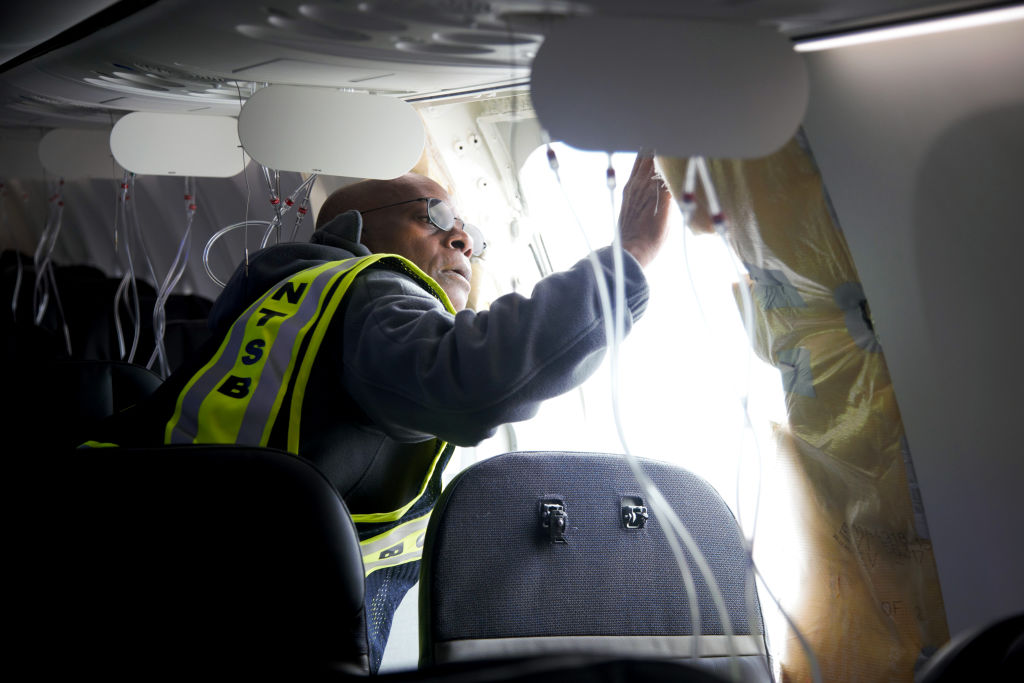
National Transportation Safety Board investigator in charge John Lovell examines the fuselage plug area of Alaska Airlines Flight 1282 Boeing 737-9 MAX on January 7, 2024, in Portland, Oregon. (NTSB via Getty Images)
For the past fifteen years, the government has allowed Boeing to conduct its own inspections related to many manufacturing and safety issues — and during that time, government reports, experts, and whistleblowers have issued more than a dozen warnings that the self-inspection program has led to serious production issues and contributed to two fatal crashes.
During much of that period, federal regulators shifted an ever-larger amount of the plane-certification process to Boeing, even as the plane manufacturer cut production corners and pledged to focus on “removing layers that help us be faster.”
Now a new government investigation, a whistleblower report, and aviation experts suggest the self-inspection program could have played a role in multiple recent high-altitude debacles, including a door plug blowing out of an Alaska Airlines flight over Oregon last month because four key bolts weren’t installed.