Public Ownership of Rail Is on the Agenda. Here’s What It Could Look Like.
Last year’s catastrophic East Palestine train derailment has spurred calls from a rank-and-file labor group for public ownership of rail infrastructure. We spoke to an expert about what that could look like in the US, which is dominated by for-profit rail.
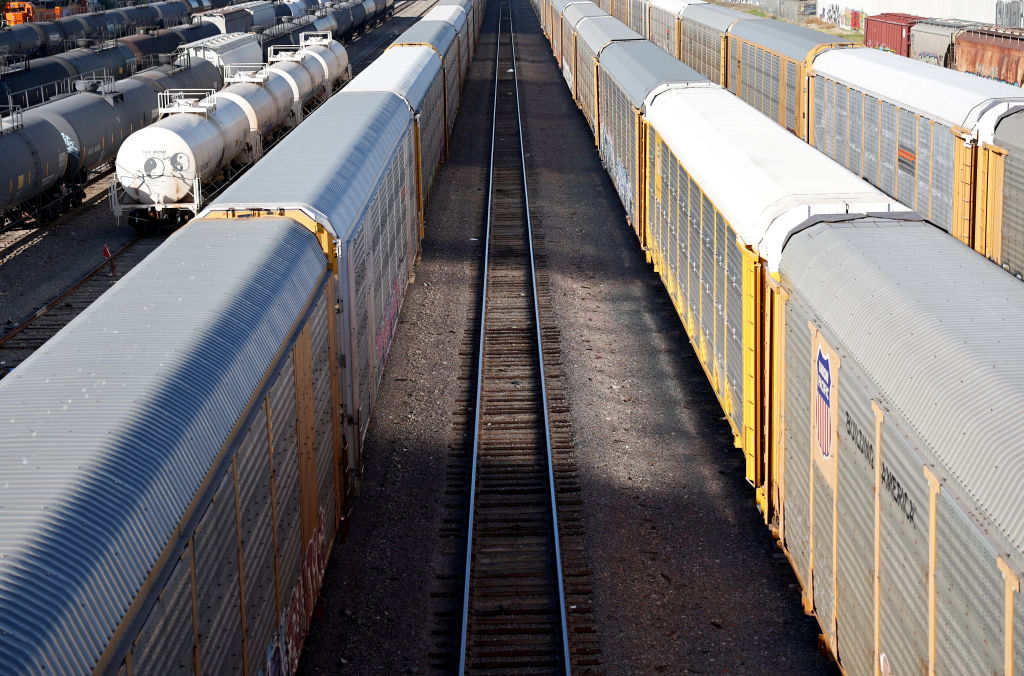
Freight rail cars sit in a rail yard on November 22, 2022, in Wilmington, California. (Mario Tama / Getty Images)
Nearly one year ago, on the night of February 3, 2023, a Norfolk Southern freight train carrying hazardous materials derailed in East Palestine, Ohio. Videos of the smoke and fire released by the nearly two-mile-long train went viral, and residents in the community reported severe health effects.
The rail disaster triggered an outcry: Why did this happen, and what can any of us do about it? Soon, there were articles detailing the alarming state into which the country’s railroads have fallen: accidents are up, and oversight is hard to come by. Plus, there is a severe squeeze on rail workers, many of whom lack sick days of any kind and are effectively always on call.
Railroad Workers United (RWU), a caucus of rank-and-file workers spanning all thirteen national rail unions, recently released a video offering one answer to the rotten state of US rail. “Putting America Back on Track: The Case for Public Rail Ownership” opens in East Palestine, with a resident of the area showing the viewer photos he took the night of the Norfolk Southern derailment. The video goes on to make the case for public ownership of rail, which has been a focus for RWU over the past year.