The Putin Regime Is Straining Under Its Own Contradictions
Several tensions run deep in Russian society: Politics are decided by elections without democracy. A growing number of Russian billionaires have outlandish wealth but no political power. And Putin is a populist without the people.
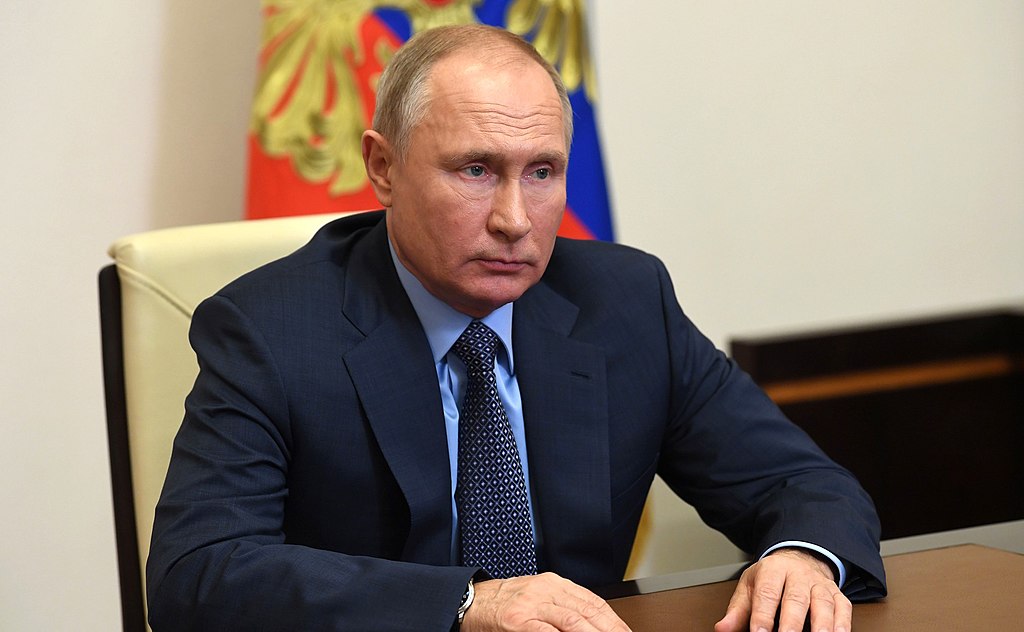
Russia’s billionaire class has required the Russian state, and Vladimir Putin personally, to ideologically and organizationally protect them. (www.kremlin.ru / Wikimedia Commons)
Russia’s invasion of Ukraine on February 24, 2022, has sparked a new and volatile conflict in Europe that will have global consequences. Yet Russian politics remain a mystery to many in the West, with the personality of President Vladimir Putin often treated interchangeably with the Russian regime and society. In this interview, originally recorded for the podcast of the University of Pennsylvania’s Andrea Mitchell Center for the Study of Democracy, Rafael Khachaturian sat down with St. Petersburg-based researcher and lecturer and Openleft.ru editor Ilya Matveev to discuss the social, political, economic, and ideological foundations of the regime, to provide additional context about Russia’s geopolitical goals.
Rafael Khachaturian
You have noted that the 2010s were a period of economic stagnation for Russia. What changed after the period of uneven but relative growth in the early 2000s? What is the state of the Russian economy today, both domestically and internationally?
Ilya Matveev
In the 2000s, Russia was one of the economically fastest growing nations in the world. In that sense, it was similar to China. But in the next decade, in the 2010s, things changed, and average growth was closer to 1 percent. Why is that? For one, economic growth in the 2000s in Russia was different from, for instance, Chinese growth, because it was basically a growth spurred by a recovery from the 1990s. There was productive capacity, in terms of factories left from the Soviet Union, that had basically stopped working in the 1990s because of a complete economic collapse. Yet there was a lot of potential for utilizing all this productive capacity, and that was what indeed happened in the 2000s. New owners and big businesses made modernizing investments and utilized already existing productive capacity.