John Lennon Was a Radical Who Believed in the Subversive Potential of Rock Music
John Lennon understood the contradictions of music making under capitalism but couldn’t solve them. Having struggled against being transformed into a commodity, he fell victim 43 years ago today to a nightmarish version of the pop fan’s need to be a star.
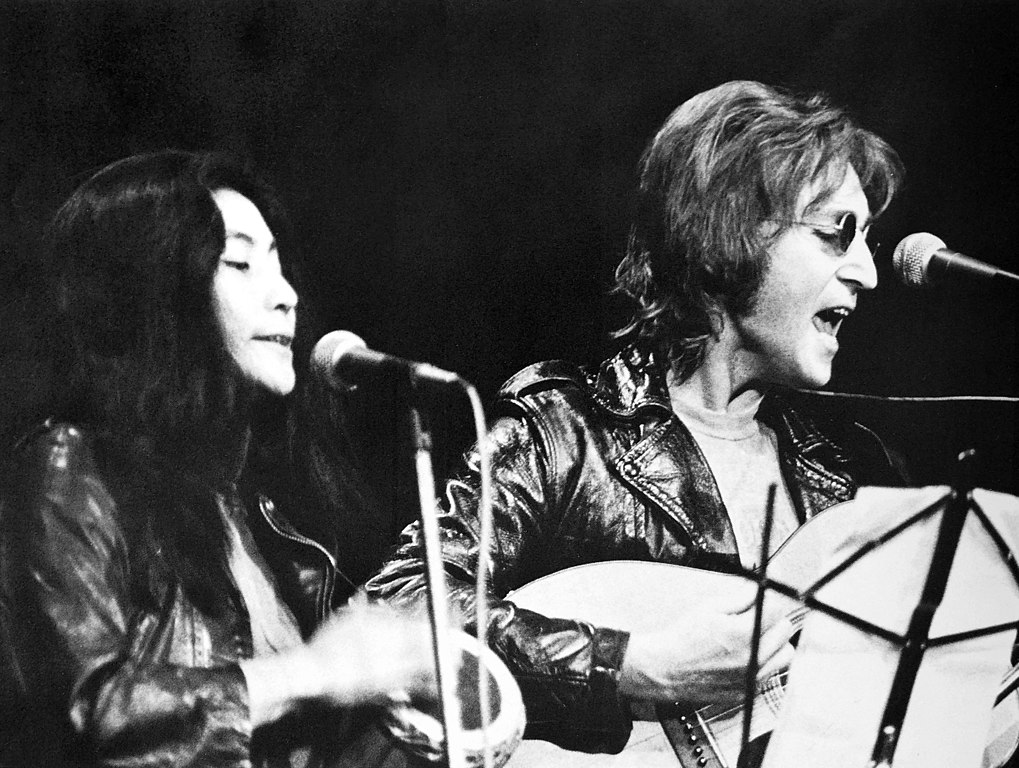
Yoko Ono and John Lennon playing at the John Sinclair Freedom Rally at Crisler Arena in Ann Arbor, Michigan, December 10, 1971. (Wikimedia Commons)
“Death of a Hero” it said in big black letters across the front of the Daily Mirror, and if I hadn’t known already I’d have expected a story about a policeman or soldier in Northern Ireland. The media response to John Lennon’s death was overwhelming as what began as a series of private griefs was orchestrated by disc jockeys and sub-editors into a national event, but it was difficult to decide what all this mourning meant.
The media themselves seemed less slick than usual, more ragged in their attempts to respond to a genuinely popular shock. What came through was not just Beatle-nostalgia but a specific sadness at the loss of John Lennon’s Beatle qualities — qualities that never did fit easily into Fleet Street ideology. “The idea,” as Lennon once told Red Mole, “is not to comfort people, not to make them feel better but to make them feel worse.”
The Mirror, its populist instincts currently sharpened by Thatcherism, got the mood most right. John Lennon was certainly the nearest thing to a hero I’ve ever had, but though I knew what this meant in fan terms (buying Beatles records at the moment of release, dreaming about my own Lennon friendship — “I’ll never meet him now,” said one friend when she heard the news) I’d never really stopped to think what the pleasure I got from Lennon’s music had to do with heroism.