The European Union Has Been Shaken by Its Crises — but the Left Needs a Plan to Change It
The pandemic and the war in Ukraine have shaken many of the European Union’s dogmas. Yet the EU has repeatedly defied predictions of imminent collapse — posing the need for a serious left-wing program to reform it.
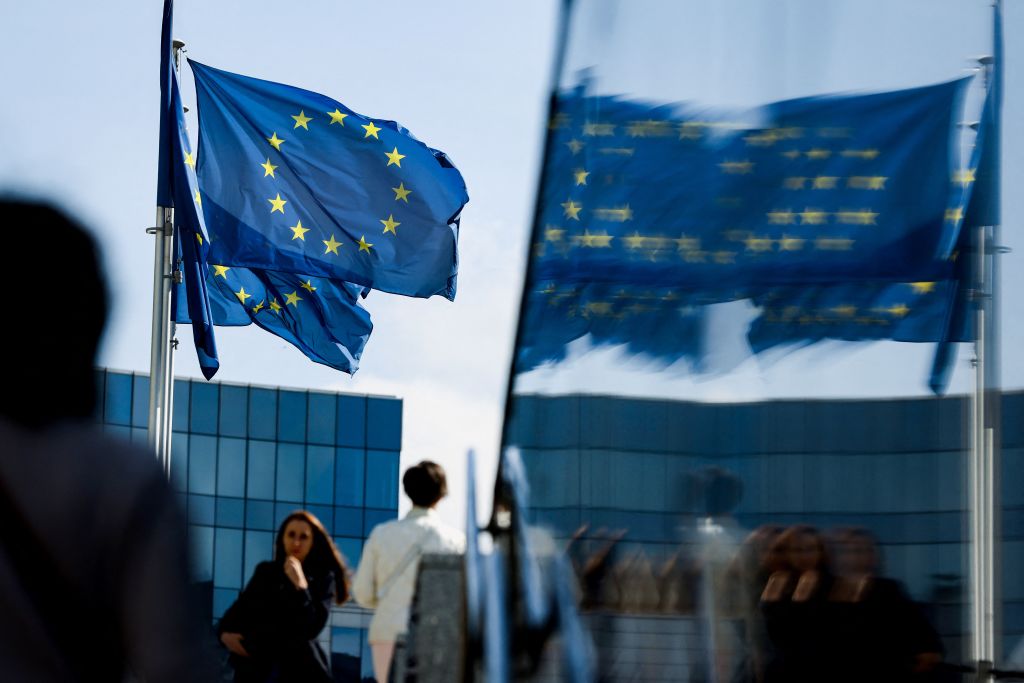
A program for Europe needs to be about providing social protection and collective power. (Kenzo Tribouillard / AFP via Getty Images)
In the 1990s, the European Union emerged amidst triumphalism over the new age of globalization. Yet in the last decade, events from the sovereign debt crisis to the COVID-19 pandemic and Russia’s invasion of Ukraine have forced it to cope with severe instability. Lurching from crisis to crisis over issues as diverse as migration and budget deficits, EU policymaking has often appeared rudderless or merely reactive. Its staunchest critics on the Left decry the antidemocratic nature of European institutions, designed to cushion the common market from popular control and oversight. But despite its many flaws, the bloc has so far managed to defy predictions of its imminent collapse.
Today, the European project is at a turning point. In hindsight, the 2016 Brexit vote appears to have been an exception: rather than seeking a split, the continental far right increasingly looks to the EU as a potential vector for power and conservative policymaking. The austerity debates that dominated the bloc in the last decade have likewise taken a backseat since the start of the pandemic, with Brussels currently reforming the rules regulating member-state debt. Casting a pall over transatlantic relations, the Donald Trump years bolstered calls for European “strategic autonomy” — the idea that the twenty-seven-member-state EU needs to chart a course more independent from Washington. Russia’s invasion of Ukraine, however, has pushed in the opposite direction, leading to what some fear could amount to a reinforced European dependence on the United States.
Chloé Ridel is an essayist and civil servant. She has worked in Brussels for the European Commission and in Paris and Bucharest for the French Ministry of Economy and Finance. Ridel is cofounder and assistant director of the Institut Rousseau, a Paris-based think tank specialized in environmental and social policy. She is the author of the 2022 essay D’une guerre à l’autre, which provides an overview of the role that crises have played in the development of the European project. Ridel sat down with Jacobin’s Harrison Stetler for an extended conversation on the EU and its transformations in an age of turmoil.