Gustavo Petro’s Left-Wing Government Is Facing Staunch Resistance in Colombia
After a hopeful start in 2022, Gustavo Petro’s leftist Colombian government has run into major obstacles from economic elites. But the powerful mobilizations that brought him to power, paired with parliamentary negotiating, may be able to turn that around.
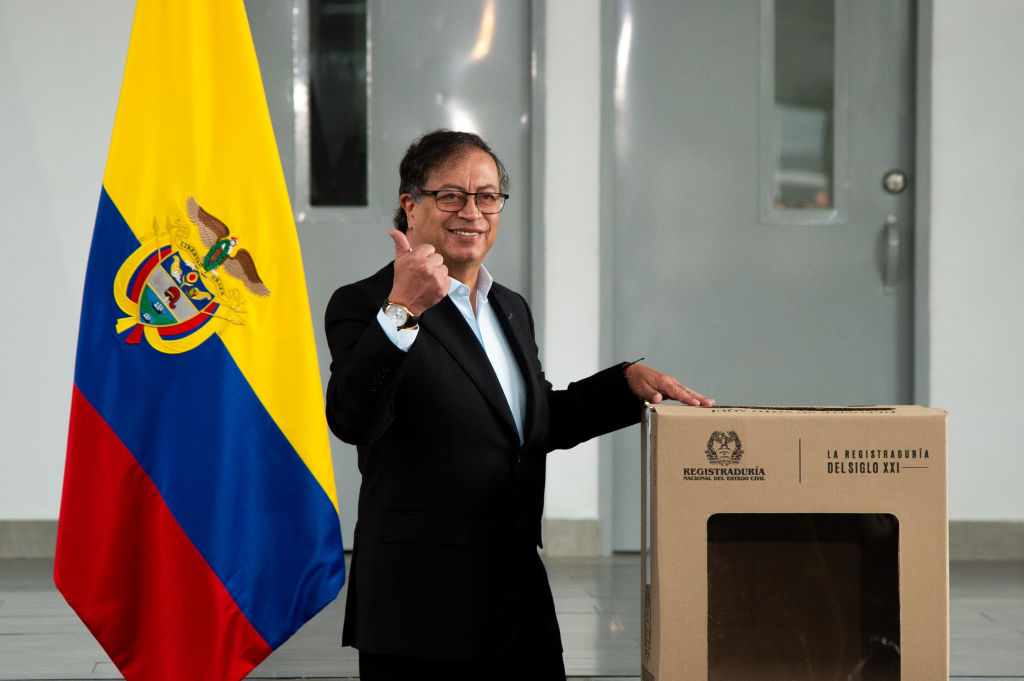
President Gustavo Petro casts his vote during the Colombian regional elections in Bogotá, October 29, 2023. (Chepa Beltran / Long Visual Press / Universal Images Group via Getty Images)
“If the people are mobilized, this government will not be overthrown. The reforms will go ahead. The strategy is to mobilize, we want people to organize themselves.” This was Gustavo Petro’s explicit vow to the crowd gathered in Bogotá’s Plaza Bolívar on September 27.
The promise, made by the first left-wing government in Colombian history, sounded convincing. But the result of Colombia’s October 29 regional and local elections, which saw traditional parties score victories in the largest cities and most regional governments, has weakened Petro’s already under-fire government and hamstrung his ability to deliver progressive measures.
The executive, led by Petro and Vice President Francia Márquez, enjoyed notable achievements during their first year in office: peace talks with the National Liberation Army (ELN) guerrillas, progressive tax reform, strong environmental policies. But recent polls show a drop in popular support for the president, and his key reforms have been blocked in a hostile parliament.