Blacklisted Communist Writer Albert Maltz’s Last Novel Will Finally Be Published in the US
When Communist writer Albert Maltz was blacklisted in the McCarthyist era, no commercial publisher in the United States would touch his novel A Tale of One January. A new edition slated for US distribution means his 70-year blacklist will finally end.
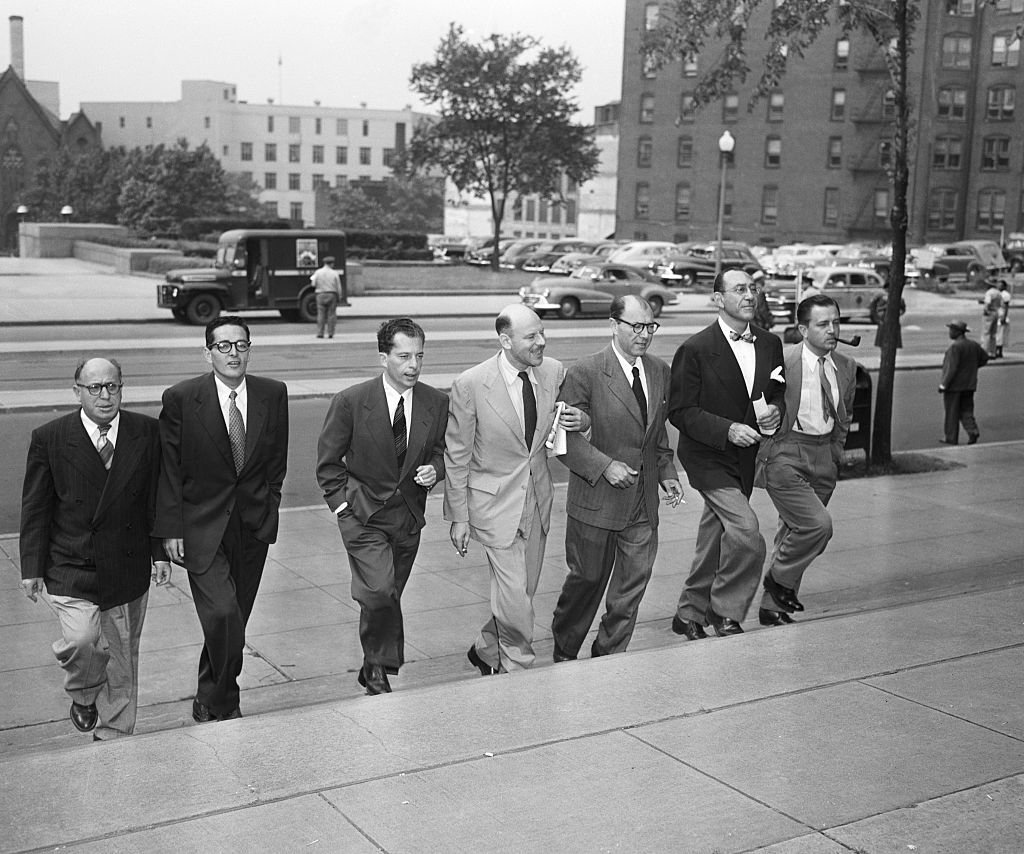
Seven Hollywood writers and directors arrive for trial at District Court in Washington, DC, June 20, 1950. Albert Maltz is third from left. (Bettmann / Getty Images)
There are many paths to the literary grave — bad timing, shifting taste, a lazy publicist. But the surest is the intentional, politically motivated burial of a writer who might otherwise be integrated into the mainstream canon. Politically persecuted writers are often remembered not for their books, but for their imprisonment; not for their works, but for their suppression. Sometimes the sympathetic resurrection of an author is actually a second burial, as the fame of the blacklisted individual can overshadow their artistic contributions. Many are familiar with the Hollywood Ten, but how many have read Dalton Trumbo’s novel Johnny Got His Gun?
While Trumbo has resurfaced in recent years, his fellow Communist writer Albert Maltz remains hidden. Thanks to the long shadow cast by the blacklists, Maltz’s novel A Tale of One January was not distributed in the United States until this year. Maltz was once a best-selling author, but while his name sometimes appears in political histories, his works hardly ever appear in literary histories or critics’ accounts of twentieth century literature. If he is known at all, it’s usually as a blacklistee, not a novelist. Save for the Oscar-winning short film starring Frank Sinatra titled The House I Live In (1945), his screenplays are also largely lost to history.
Occasionally Maltz makes an appearance in the work of anti-communist historians who weaponize the “Albert Maltz Affair,” in which an article Maltz wrote for New Masses calling for artists to strive for aesthetic quality over political content was denounced by the party. They use the controversy to drive home broader, often heavy-handed points about American Communists’ authoritarianism. To these historians, Maltz and other Communist writers are only as important as their criticisms of Communism itself. Their long lives of pro-worker, anti-fascist, and anti-racist activism in the Communist Party go ignored. Only their disagreements with the Soviet Union and the domestic Communist Party are preserved — polished and cherished like precious pearls plucked from history’s vast ocean of complexity.