How the UAW Broke Ford’s Stranglehold Over Black Detroit
In the early 1900s, Ford Motor Company commanded strong loyalty from Detroit’s black workers. But the United Auto Workers broke Ford’s stranglehold through patient organizing, cementing an alliance that would bear fruit for decades.
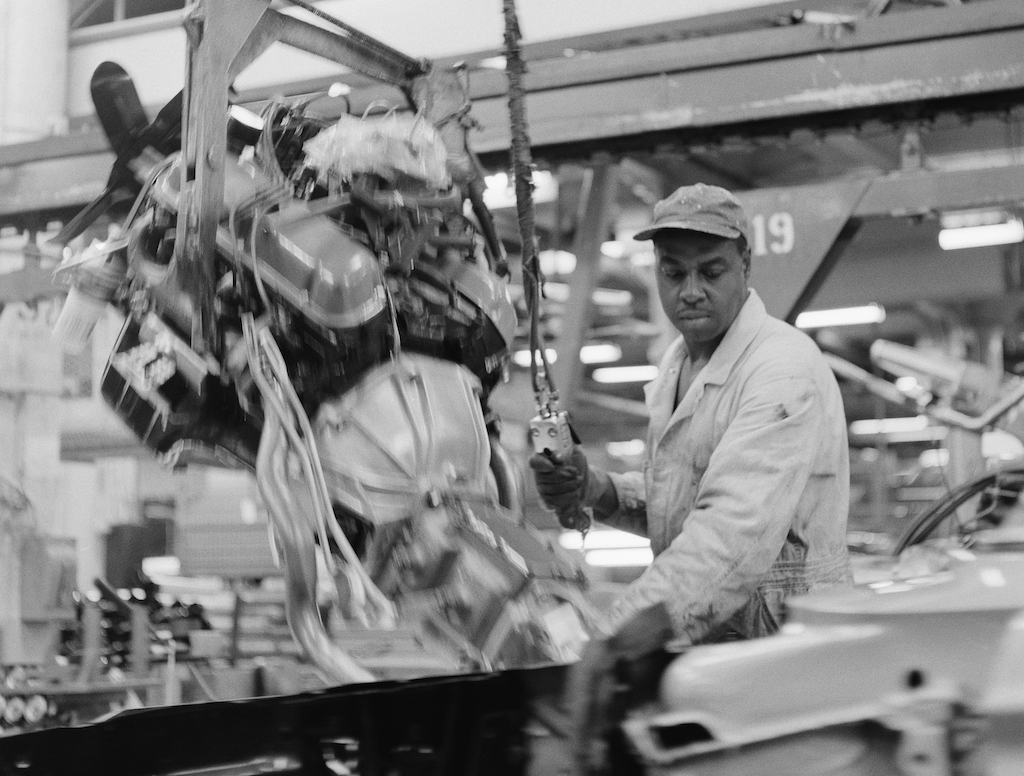
A black autoworker installs engines into Ford automobiles. (Bettmann / Getty Imges)
In December 1942, during the heat of World War II, a private report trickled in from an investigator at the Office of War Information. The department was busy monitoring the progress of defense production and the potential explosive effects of racial discrimination in employment. Discussing Detroit, the investigator noted, “It is remarkable how thoroughly the whole Negro community supports and believes in the UAW [United Auto Workers]. . . . The leadership of the UAW . . . has converted them into a solid union asset.”
Just ten years earlier, most black Detroiters would have had a hard time imagining this. The auto companies, especially Henry Ford personally, commanded the loyalty of and hegemonic influence over the city’s black workers through a sophisticated web of paternalism and patronage. Most black workers were understandably skeptical of trade unions given past discriminatory practices and their cynical use as strikebreakers by employers.
But through patient, thoughtful, and skilled organizing, the UAW was able to break through Ford’s stranglehold over Detroit’s black workers and cement a productive alliance that would bear fruit for decades.