UAW’s Electric Vehicle Win at GM Is a Huge Step Forward for a Pro-Worker Green Transition
Under pressure from the striking United Auto Workers, General Motors agreed last week to include EV battery plants in its master agreement with the union. It’s a huge victory for the UAW — and a crucial step in ensuring the transition to EVs benefits workers.
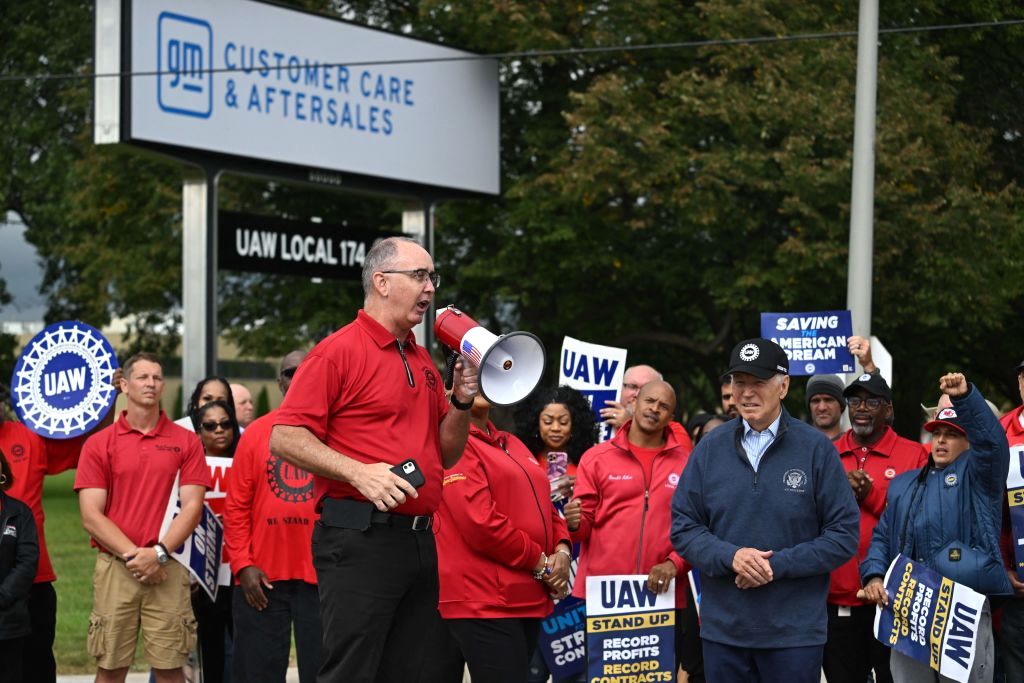
United Auto Workers president Shawn Fain addresses picketing UAW members at a General Motors Service Parts Operations plant in Belleville, Michigan, on September 26, 2023. (Jim Watson / AFP via Getty Images)
On October 5, faced with a strike at its most profitable assembly plant, General Motors came to the negotiating table with a remarkable offer. It agreed to include electric battery manufacturing in the GM–United Auto Workers (UAW) master agreement.
With this move, having been the most sluggish of the Big Three automakers in trying to meet UAW demands, GM leapt ahead of Ford and Stellantis. After constructing joint ventures in the crucial sector of the industry just coming online, GM blinked and apparently gave up on its dream of a nonunionized, low-wage workforce.
GM is investing $35 billion to produce a million electric vehicles (EV) by the end of 2025. Approximately $20 million is dedicated to research, the remainder being plowed into building or renovating plants that will manufacture and assemble the next generation of EVs. This not only includes expensive changeovers at its assembly plants, but joint-venture battery production. GM CEO Mary Barra explained: