Keynes and the Marxists
Left denunciations of “Keynesianism” often seem obvious and self-evident. But socialist economic analysis has had more to do with Keynes’s ideas than usually acknowledged.
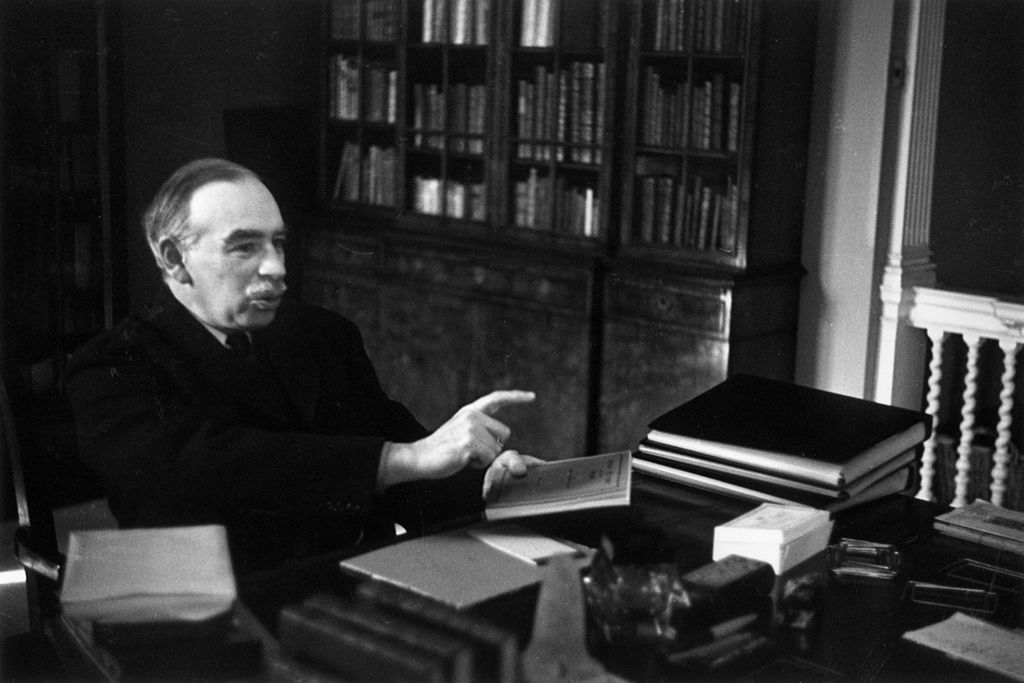
Economist John Maynard Keynes at his desk, March 16, 1940. (Tim Gidal / Picture Post / Hulton Archive / Getty Images)
Last month, Jacobin editor Seth Ackerman penned a long and wide-ranging guide to various Marxist debates about crisis theory, reformism, and the long-debated “law of the tendency for the rate of profit to fall.” The ultimate point of the essay was to critique Robert Brenner’s analysis of the “long downturn.”
Sociologist Aaron Benanav has recently provided a similarly wide-ranging reply of his own to Ackerman’s piece. I don’t wish to comment on this debate as a whole. However, I do think there is an element of Benanav’s piece worth picking up for a left-wing audience interested in these debates over economic theory.
In defending Brenner, Benanav makes a point of distinguishing his analysis from the law of the tendency of the rate of profit to fall. Instead, he tells us that Brenner, like quite a heterogeneous (and debatable) list of Marxist scholars, is a “long-wave theorist,” which means “they can all count themselves as followers of Nikolai Kondratiev.” Despite this invocation, Benanav’s piece does not articulate anything that particularly distinguishes his (or Brenner’s) analysis from orthodox economics in terms of economic analysis. His discussion of the growth of services employment and output relative to manufacturing, patterns of real GDP growth, and falls in “capital productivity” fits right into the discussions mainstream economists have with each other. So does the absence of financial factors and dynamics in capitalist economies — with the exception of one reference to “financial bubbles” caused by “state policies” aimed at “preventing their firms from suffering defeat.” Indeed, this reference fits best at a right-wing Cato Institute event on monetary policy.