George Orwell Was a Temperamental Conservative and Ideological Radical
George Orwell managed to combine a conservative temperament with a socialist rejection of oppression. A lively new biography of the English radical explains how he held these contradictions together.
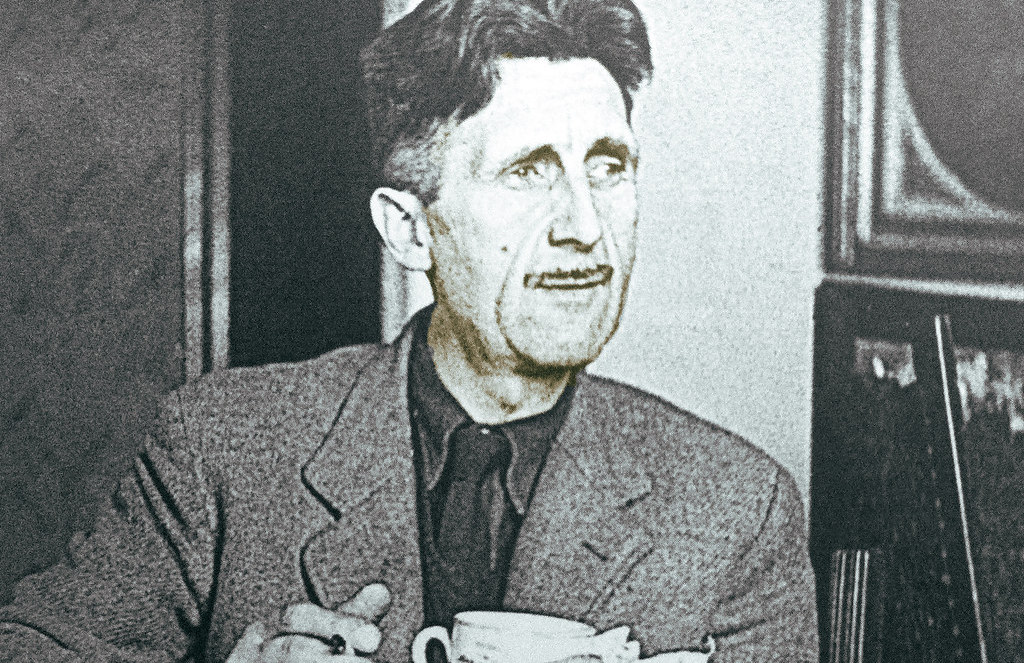
George Orwell in 1949. (Levan Ramishvili / Flickr)
Complete ideological coherence is rarely a sign that someone has thought through every issue; more often, it proves that they haven’t thought at all. Few writers have produced a body of work as riven with contradiction as George Orwell. His friend, the literary critic V. S. Pritchett, said of him that “It was impossible to know such a straying and contradictory man well.” He seems to have compartmentalized his life, keeping even friends from seeing his whole personality. A fellow World War II Home Guard member only realized that he was a left-wing writer after several months. To another friend, he would speak of nothing but goats and geese.
The task which D. J. Taylor sets himself in Orwell: The New Life is to hold together Orwell’s many contradictions. Perhaps chief among these was that Orwell was the authentic voice of English radicalism, but by temperament he was a conservative — a “bohemian Tory,” as his friend Richard Rees called him. Eileen Blair, his first wife, said that The Lion and the Unicorn could be summarized in the following single sentence: “How to be a socialist while Tory.”
Orwell liked Milton’s phrase “by the known rules of ancient liberty” but unlike Milton, Orwell — the socialist republican soldier — said that if he had lived through the English Civil War he’d rather have been a Royalist Cavalier than a Republican Roundhead because the latter were “such dreary people.” As Taylor puts it, “Most of the really revealing moments in his work come when his convictions collide with his upbringing: the incongruity of criticising the Attlee government for not abolishing the House of Lords while putting up your adopted son for a public school seem scarcely to have occurred to him.” If the strength of Orwell’s prose stems from his seeing both sides of every issue, then it is Taylor’s triumph to have shown the lineaments of how Orwell’s convictions related to his upbringing.