Joe Biden Is Engaging in Atrocity Denialism for Israel. It Has a Long History.
I’m a historian of US foreign policy. The Biden administration’s effort to muddy the waters about the staggering human toll of Israel’s assault on Gaza is in keeping with Washington’s long history of atrocity denialism on behalf of allies.
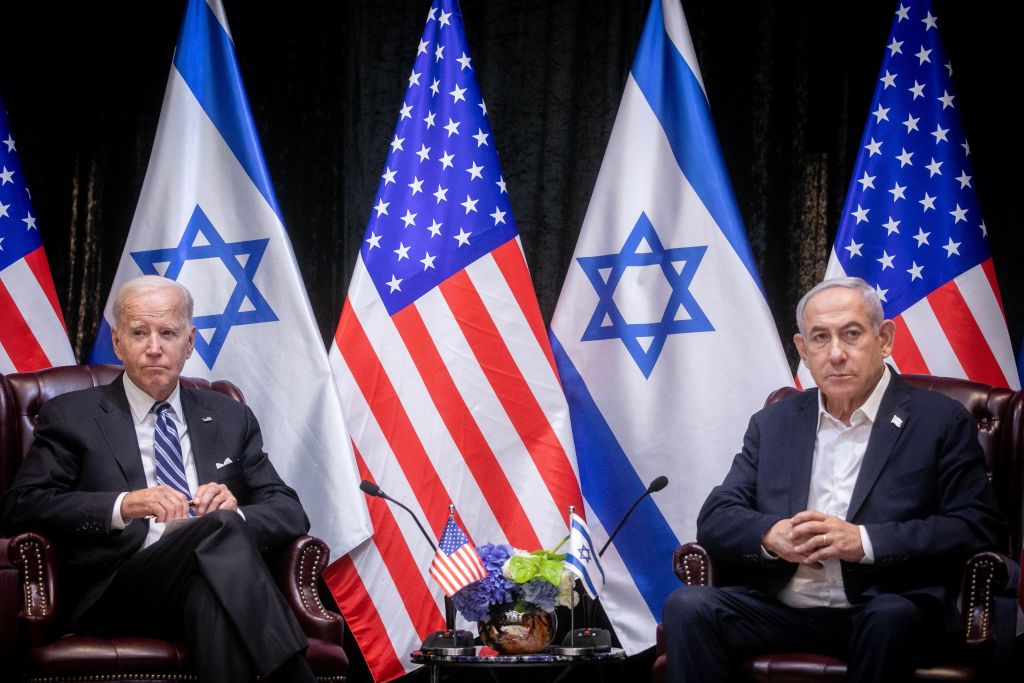
US president Joe Biden (L) and Israeli prime minister Benjamin Netanyahu (R) in Tel Aviv on October 18, 2023, amid Israel’s assault on Gaza. (Miriam Alster / Pool / AFP via Getty Images)
“I have no notion that the Palestinians are telling the truth about how many people are killed. . . . I’m sure innocents have been killed, and it’s the price of waging a war . . . but I have no confidence in the number that the Palestinians are using.” This was President Joe Biden’s response on October 26 to a reporter’s question about the death toll from Israel’s indiscriminate bombing campaign in Gaza.
As I write, Israel has seemingly cut communication networks in Gaza and unleashed its fiercest bombardment of the strip yet, following twenty days of bombing and shelling that have already killed more than 7,700 Palestinians, including at least 3,000 children, wounded some 20,000, and damaged or destroyed over a third of the buildings in Gaza. The Biden administration has sought to portray itself as both staunchly supportive of Benjamin Netanyahu’s military assault on Gaza, the ostensible aim of which is to eliminate Hamas, and concerned with the humanitarian impact on Palestinian civilians. At the same time, the United States has repeatedly vetoed United Nations (UN) resolutions calling for a humanitarian pause in the war and flatly rejected the growing global demands for a cease-fire.
The Biden administration’s repeated questioning of Palestinian casualty figures prompted the Gaza Health Ministry to release a comprehensive list of those killed by Israeli bombing and shelling. It makes for grim reading. But Biden’s attempt to sow doubt about the human toll of Israel’s assault is in keeping with a broad US pattern, stretching back decades, of rejecting allegations of mass murder by client states and allies, and of disputing casualty numbers cited by journalists, activists, and international organizations.