Today’s Hollywood Strikes Are Fights for Workplace Democracy
Early 20th-century unions rejected the idea that bosses should be the dictators of the workplace. Today, the WGA, SAG-AFTRA, and other major unions have rediscovered the strike’s power to secure workers’ control over their own lives.
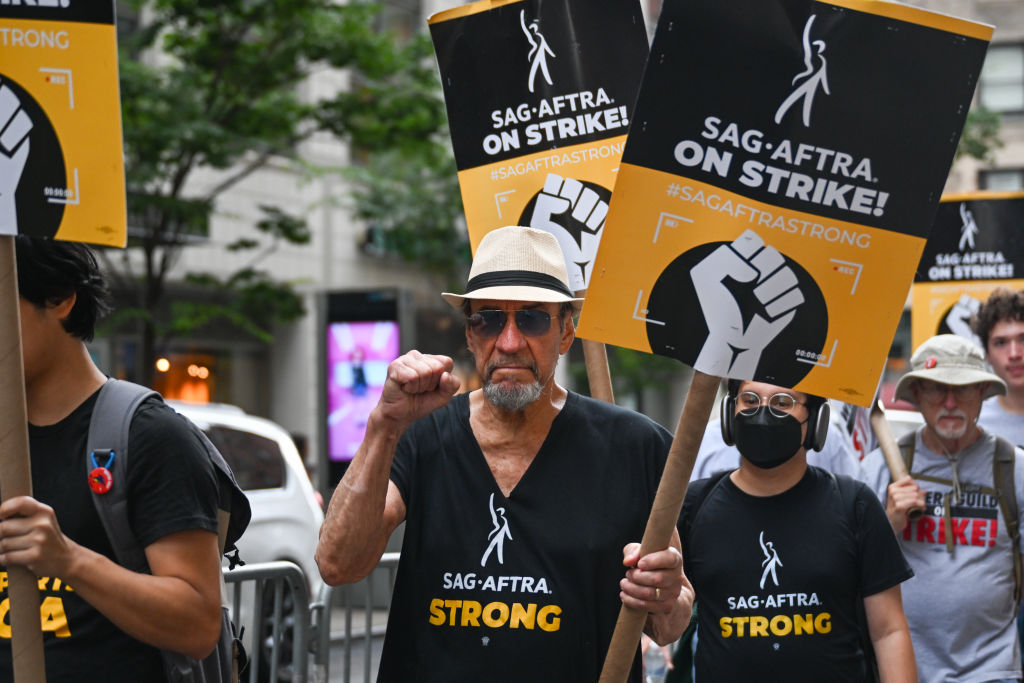
F. Murray Abraham joins members and supporters of SAG-AFTRA and the WGA to walk a picket line outside Netflix on August 4, 2023, in New York City. (Alexi Rosenfeld / Getty Images)
The eyes of America are on Hollywood this summer, but not for the usual reason: writers and actors for film and TV are shutting down production with their first joint strike since the 1960s. The Writers Guild of America (WGA), representing 11,500 writers, went on strike on May 2 and were joined on the picket line on July 14 by the 160,000-strong Screen Actors Guild (SAG-AFTRA).
In the public imagination, strikes are often considered to be fights where workers demand better pay or more generous benefits. These are common reasons for strikes, and indeed higher wages and residual payments are among the central demands in the current Hollywood walkout. But strikes are also one of unions’ most powerful weapons for fighting back against business owners and corporate managers who claim the right to run workplaces like private dictatorships.
Unions, in other words, need not only use strikes to demand a larger share of the pie that workers produce — they can also wield them to affect how workers make that pie.