Can Boycotts Help Workers Win?
Consumer boycotts have a storied history in labor struggles like the United Farm Workers’ organizing campaigns in the 1970s. But they’re difficult to pull off. Veteran union organizer Stephen Lerner explains when a boycott can work for workers.
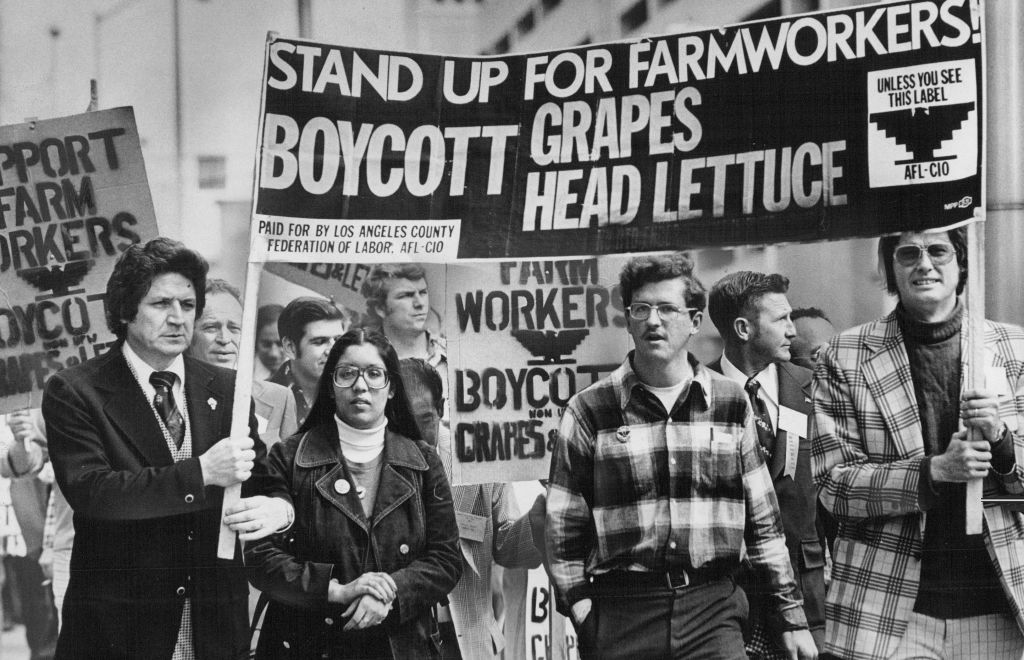
Delegates to the Denver Area Labor Federation convention marching in support of the United Farm Workers boycott, February 27, 1976. (Denver Post via Getty Images)
While boycott campaigns generally have a mixed record at best, this tactic was used successfully in the recent unionization and first contract victories at Burgerville in Oregon as well as Spot Coffee in western New York, a campaign that set the stage for the subsequent Starbucks upsurge. Raising the slogan “No Contract, No Field Trips,” unionizing workers at Medieval Times in New Jersey and California are now working with K-12 teachers to boycott the company until it stops its alleged union busting. And just last week, after months of student organizing and protest, Cornell University agreed to stop selling and serving Starbucks on campus due to the company’s flagrant violation of federal labor law. This victory is spurring a push to boycott Starbucks at colleges across the country.
With workers and unions beginning to reconsider the potentialities and pitfalls of boycotts, it makes sense to take a look back at the famous boycott campaigns led by the United Farm Workers (UFW) from 1965 through 1975 to demand that agricultural companies recognize and bargain with their union.
To discuss the lessons of the victorious UFW boycotts, and the dynamics of this tactic generally, Jacobin’s Eric Blanc sat down with Stephen Lerner, whose long and celebrated organizing history began as a volunteer for the UFW in the early 1970s.