We’re Organizing Unions at Amazon and Starbucks. We Won’t Back Down.
Amazon labor organizer Chris Smalls and Starbucks organizer Jaz Brisack talk to Jacobin about racist union busting, being invited to the White House, and how genuine human interaction is the key to workplace organizing when the boss treats workers like robots.
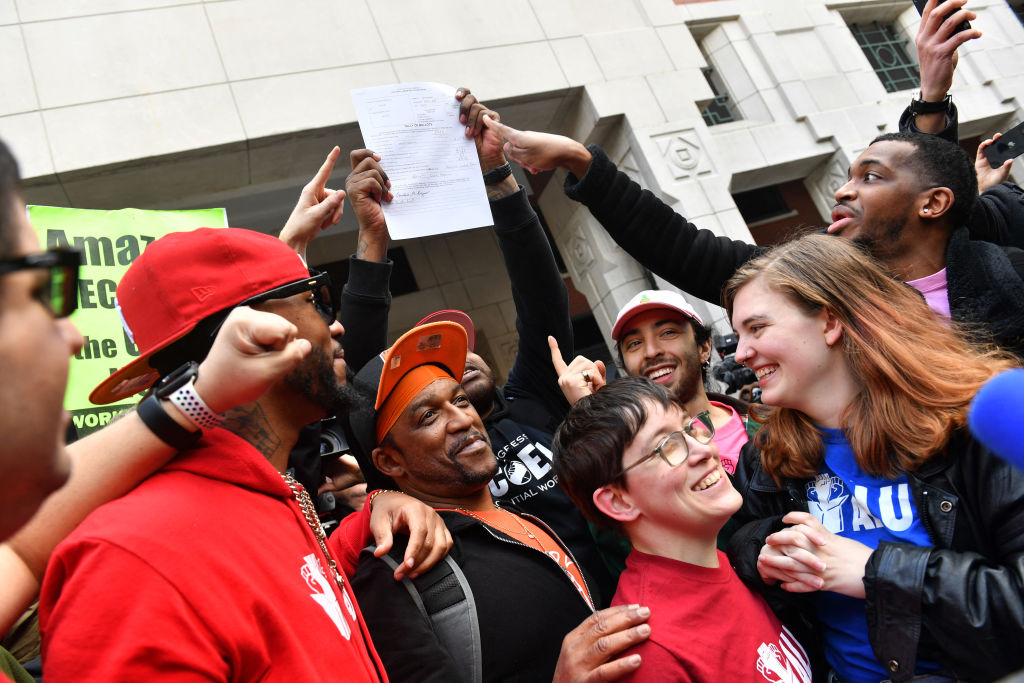
Union organizer Christian Smalls (left) celebrates with Amazon workers following the April 1, 2022, vote for the unionization of the Amazon Staten Island warehouse JFK8 in New York. (Andrew Renault /AFP via Getty Images)
Supporters of organized labor have long regarded megacorporations like Amazon and Starbucks as key sites of struggle. Workers in Amazon warehouses and Starbucks coffeehouses help millions of customers every day and bring in billions of dollars in revenue for their companies every year. But while workers keep these businesses running, top brass like Jeff Bezos and Howard Schultz collect the profits, stiffing workers on pay and benefits while subjecting them to difficult working conditions.
Workers are increasingly unwilling to put up with it. Since December 2021, over two thousand Starbucks workers have unionized. And in April of this year, the independent Amazon Labor Union (ALU) won a massive victory: the first unionized Amazon warehouse.
These triumphs have changed the terrain of the American labor movement. In a conversation with Dan Denvir of Jacobin and The Dig, Chris Smalls and Jaz Brisack, lead organizers from Amazon and Starbucks, explain how they organized with their coworkers to form unions, the challenges they face from hostile management, and how the growing labor movement can shape local and national politics.