Artist Dora García Considers Alexandra Kollontai and Mexican Feminism
The newest of artist Dora Garcia’s films on feminist revolution, Amor Rojo’s simultaneous exploration of Soviet feminist Alexandra Kollontai and today’s Mexican feminism is the most compelling yet, but it misses the politics of the contemporary moment.
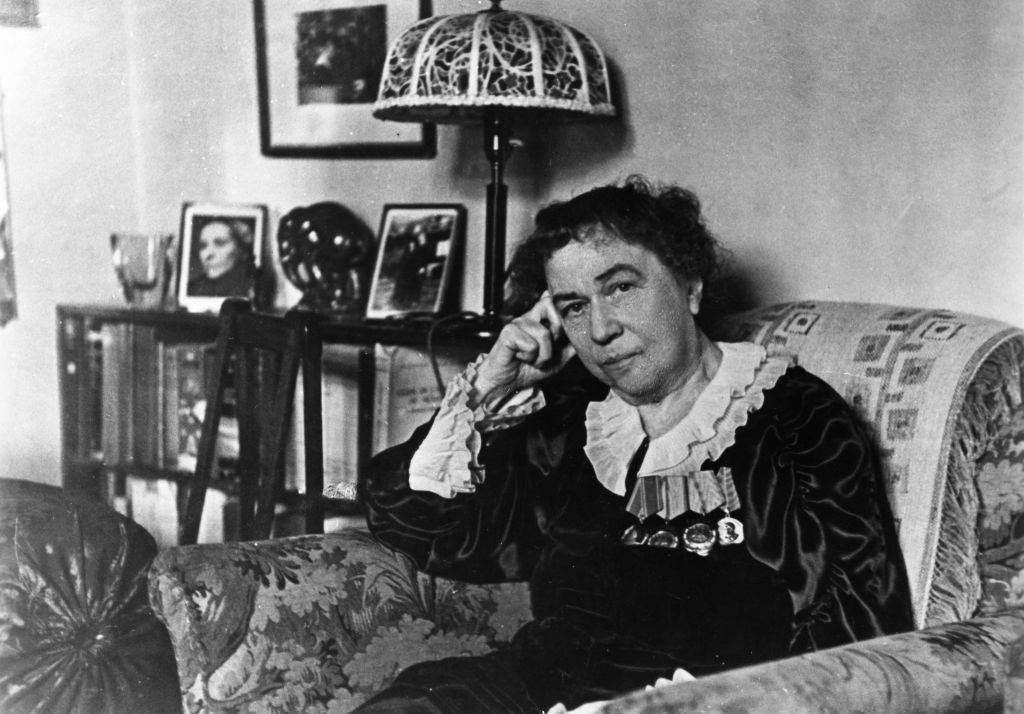
Alexandra Kollontai at her home in Moscow, April 1946. (Sovfoto / Universal Images Group via Getty Images)
Early in the film Amor Rojo, artist Dora García’s exploration of the legacy of Bolshevik feminist Alexandra Kollontai and the contemporary Mexican feminist movement, a narrator reads Kollontai’s thoughts on solidarity over dramatic footage of recent feminist protesters in Mexico lighting a bonfire. Solidarity comes not from the mere recognition of “a community of interests,” Kollontai wrote, but from the “capacity for love . . . in the broadest sense of the word.”
A revolutionary, Soviet diplomat, writer, and important thinker on communism and the condition of women, Kollontai has been the object of a small revival in recent years, inspiring writing by left feminist thinkers like Kristen Ghodsee and Jodi Dean and discussion in socialist-feminist reading groups. García has been leading this reconsideration.
Kollontai’s work and life was the subject of García’s exhibition Red Love at an art space in suburban Stockholm in 2018, which was followed by an anthology of the same title reflecting on the communist thinker’s legacy. The title was an allusion to Kollontai’s 1923 novel of the same name. (I wrote about García’s anthology and the Kollontai revival for Lux in 2020.)