Ron DeSantis Is Too Extremely Online to Stand a Chance
Ron DeSantis’s conservatism is by and for internet-addled right-wing media consumers so accustomed to having their eccentricities satiated and pleasure centers stimulated that they’ve become increasingly unmoored from the real world.
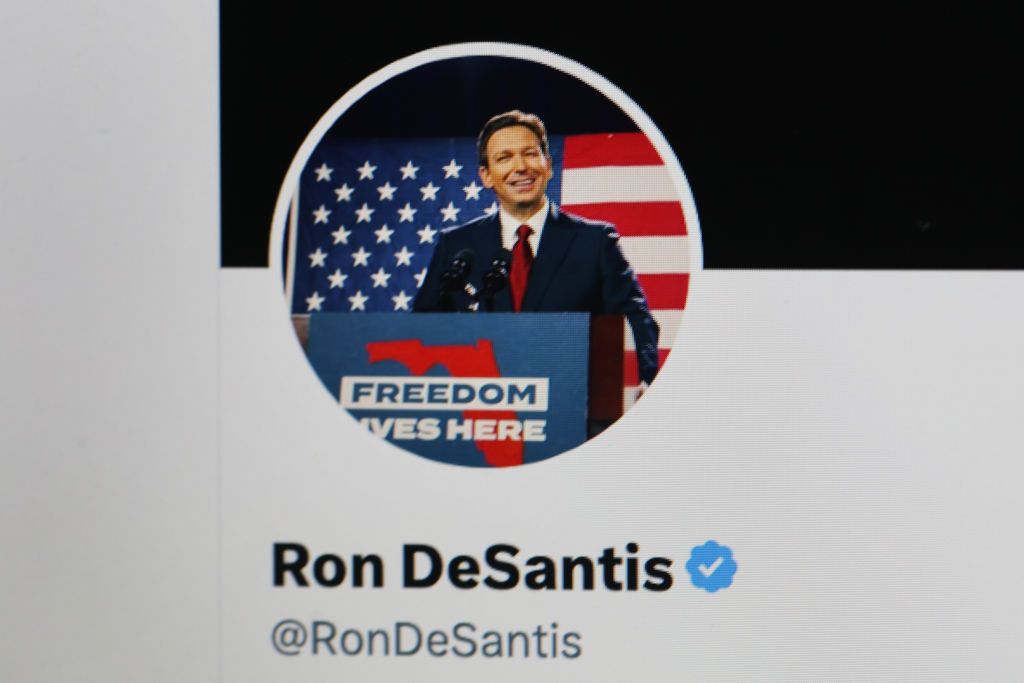
Florida governor Ron DeSantis’s Twitter profile page, May 24, 2023. (Scott Olson / Getty Images)
Aside from accidentally generating some schadenfreude, there is no conceivable metric by which Ron DeSantis’s presidential launch this week on Twitter could possibly be deemed a success. If a successful campaign event projects energy and confidence, the DeSantis fiasco had all the majesty of a dysfunctional Zoom meeting, replete with false starts, technical glitches, and unscripted background chatter. And throughout it all, the Florida governor ultimately rallied an audience smaller by orders of magnitude than Buzzfeed once got by blowing up a watermelon or Drake did by playing Fortnite.
It’s worth pondering what the hell DeSantis and his operatives were thinking. A less choppy version of the same event would still have lacked a cheering crowd and likely been absent many of the older, cable news–addicted voters who tend to play such a pivotal role in Republican primaries (they aren’t on Twitter). But notwithstanding these basic practical issues, there’s a deeper insight to be gleaned about the ossified strain of conservatism DeSantis represents in what will almost certainly be his doomed campaign against Donald Trump.
For a fleeting moment after last year’s midterms, Florida’s governor managed to look like he might actually be a viable opponent for the former president. The case for DeSantis, amplified ad nauseam by the Murdoch media and parts of the Republican apparatus eager to ditch Trump, was that he represented a competent and baggage-free version of the same thing. By anointing the governor of Florida — a man whose political style basically consists in serving right-wing activist constituencies an all-you-can-eat buffet of red meat — primary voters were informed that they could have something both more palatable and more electable.