The Labour Party Refuses to Address the UK’s Economic Problems
Amid a brutal cost-of-living crisis after decades of austerity, popular support for progressive economic policy is the highest it’s been in years. Yet Keir Starmer’s Labour Party refuses to deliver — because it’s afraid of empowering workers.
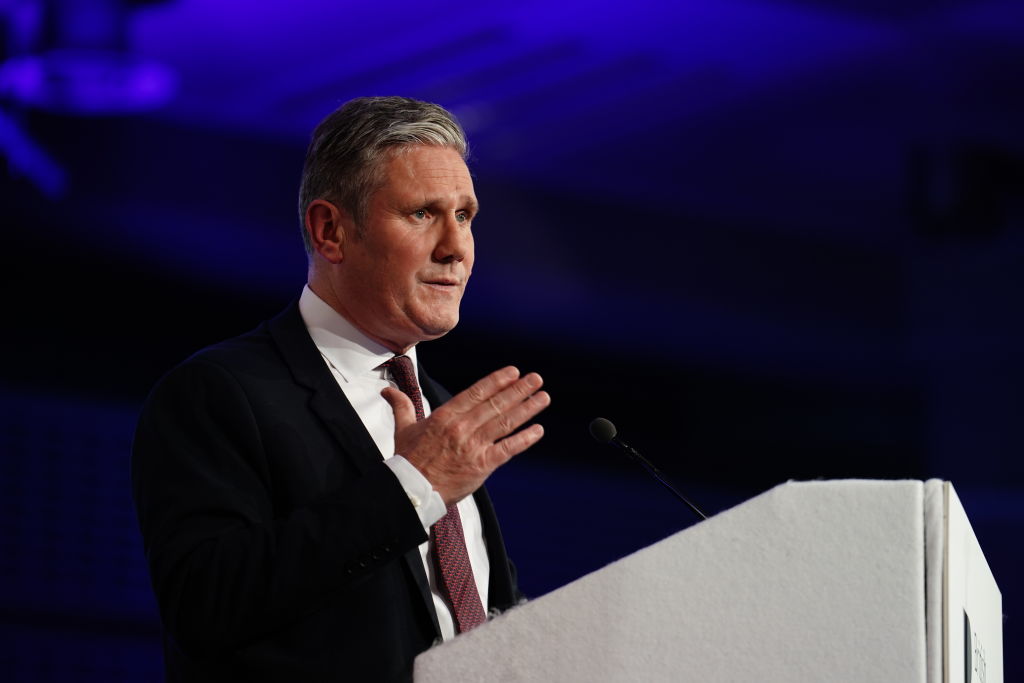
Labour Party leader Keir Starmer speaking during the British Chambers Commerce Annual Global conference in London on May 17, 2023. (Jordan Pettitt / PA Images via Getty Images)
There can be no denying that, over the last several years, there has emerged a broad economic consensus in favor of a fundamental transformation of the UK economy.
In 2019, a poll from the Institute for Public Policy Research and YouGov found that 60 percent of people wanted the government to introduce significant changes in how the economy is run. In 2020, a poll from Unite and Survation found that 60 percent of people believed that cuts to public services had had a negative impact, while 71 percent believed that taxing the wealthy would be preferable to renewed austerity. In 2022, Ipsos MORI found that 67 percent of people agreed that ordinary working people do not get their fair share of the nation’s wealth.
This represents a shift from previous data. The British Social Attitudes Survey shows that a majority of UK adults favor increasing taxes and spending more ever since 2017, before which point more were in favor of keeping spending the same.